Skip to content

AC installation & replacement

AC installation and system replacement in Austin, TX.

The equipment is the part everybody shops. The install is the part that decides whether the house is comfortable. Load calculation first, ductwork second, box third.

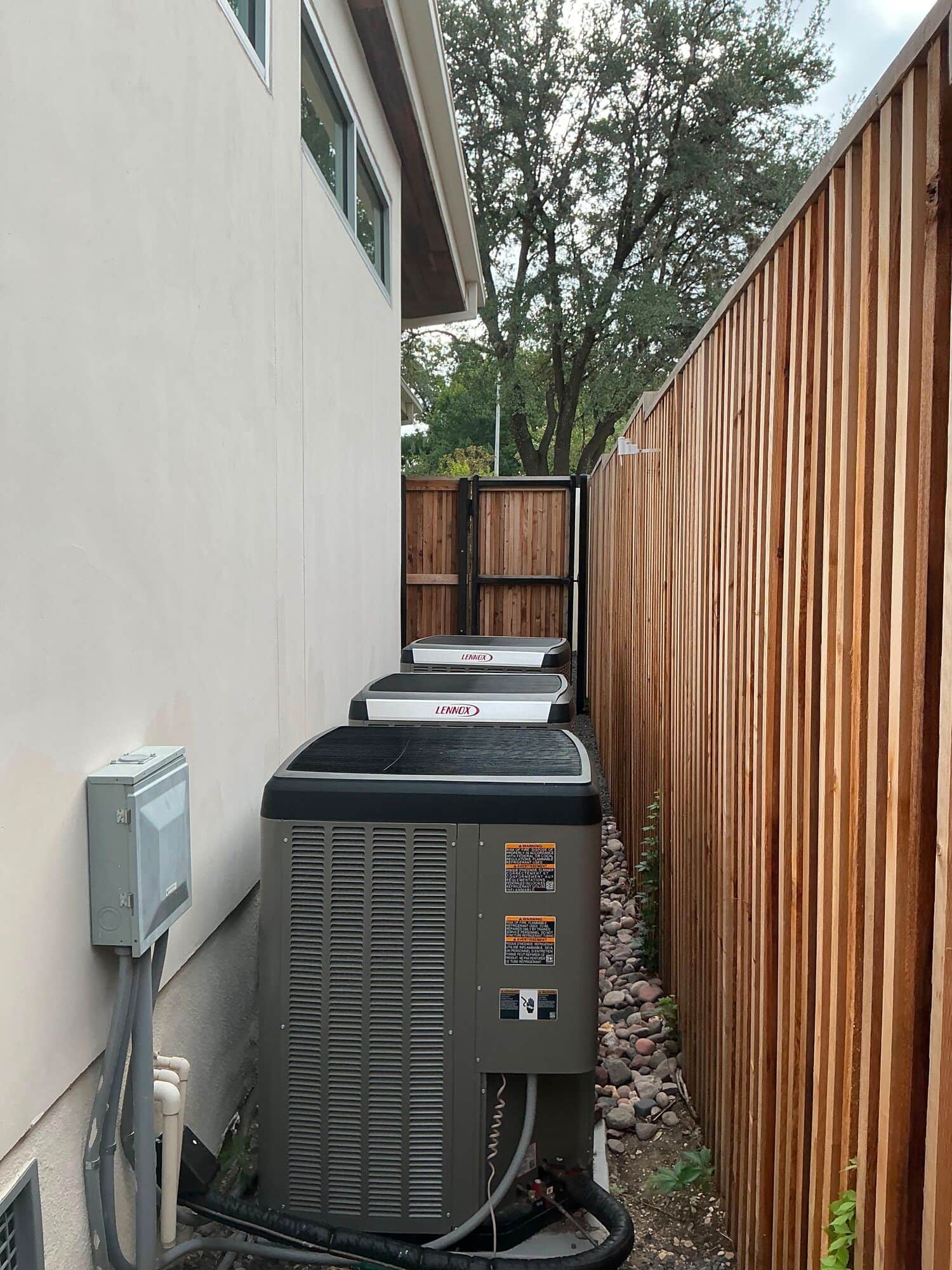
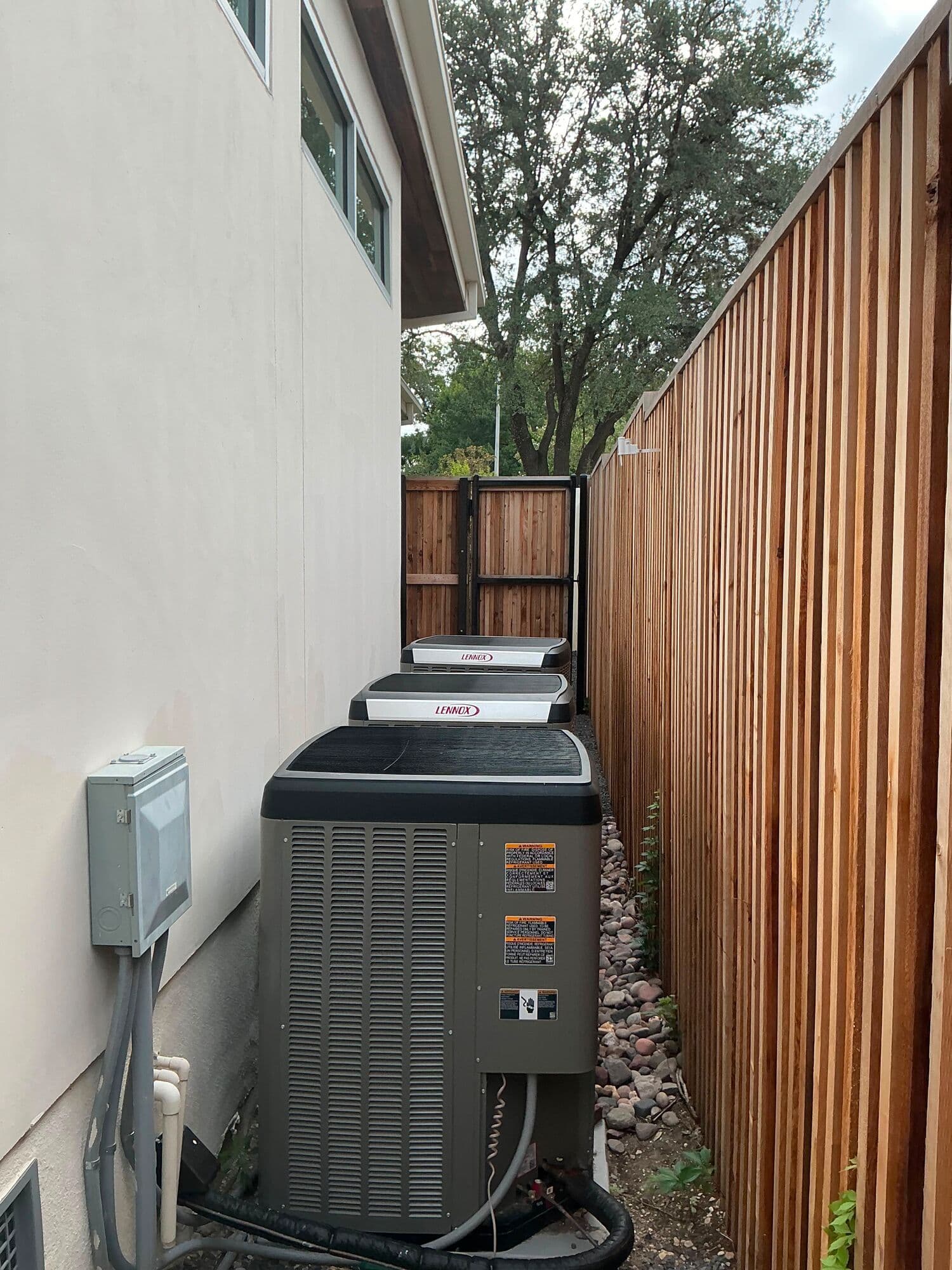
Three Lennox condensing units lined up down the side yard of a modern stucco house, between a new cedar fence and a river-rock bed, with the electrical disconnect on the wall.

Who this is for

Homeowners whose system is past economical repair, anyone whose house has never been comfortable, remodels and additions, and property owners planning a changeout before the summer rather than during it.

The detail

What this work actually involves.

The most expensive mistake in a replacement is made before anybody touches a wrench: matching the new equipment to the tonnage on the old data plate. If the original system was oversized — and in Central Texas an enormous number of them are — that decision copies the mistake forward for another fifteen years. Oversized equipment satisfies the thermostat quickly, shuts off before it has dehumidified anything, and leaves you with a house that reads cold and feels damp. Under a Texas humidity load, runtime is not the enemy. Short cycling is.

So the sequence matters. A load calculation based on the actual building — orientation, glazing, insulation, infiltration, ceiling height, how much of the ductwork is baking in a 140-degree attic — tells you what the house needs. Then the duct system gets evaluated, because a four-ton condenser connected to a duct system that can move two and a half tons of air is a four-ton condenser that behaves like a broken one. Only then does the equipment selection make sense.

The installation itself is where the long-term reliability is decided, and almost all of it is invisible afterwards. Line sets brazed under flowing nitrogen so the inside of the tubing does not scale. A deep vacuum pulled and held, so there is no moisture left in the system to make acid. Charge weighed in for the line set length and then verified against superheat and subcooling. A condensate drain that is trapped correctly, sloped, and terminated where you will notice if it backs up. A disconnect and whip that are actually rated for the equipment. Then airflow measured at the registers rather than assumed at the air handler.

What's included

AC Installation & Replacement, line by line.

  • Load calculation on the actual building, not the tonnage of the old unit
  • Duct system evaluated for static pressure, return capacity and condition before equipment is selected
  • Old equipment and refrigerant removed and recovered properly
  • New line set, or existing line set flushed and evaluated, brazed under nitrogen
  • Deep vacuum pulled and held before charging
  • Charge weighed in for line length, then verified on gauges
  • Condensate drain trapped, sloped, run to daylight, with a float safety switch
  • Electrical: disconnect, whip and breaker sized to the new equipment
  • Airflow and temperature split verified at the registers before we leave

Why the install matters more than the badge

Four things that decide whether a new system performs.

Two identical systems, installed by two different companies, will not behave the same in a Central Texas August. Almost everything that separates them happens on install day and is invisible afterwards.

Three Lennox condensing units lined up down the side yard of a modern stucco house, between a new cedar fence and a river-rock bed, with the electrical disconnect on the wall.
01

Size it to the house, not the old unit

A load calculation looks at orientation, glazing, insulation, infiltration and how much duct is sitting in a 140-degree attic. Copying the tonnage off the old data plate copies whatever mistake was made the first time — and in this humidity, oversizing is the mistake that leaves a house cold and clammy.
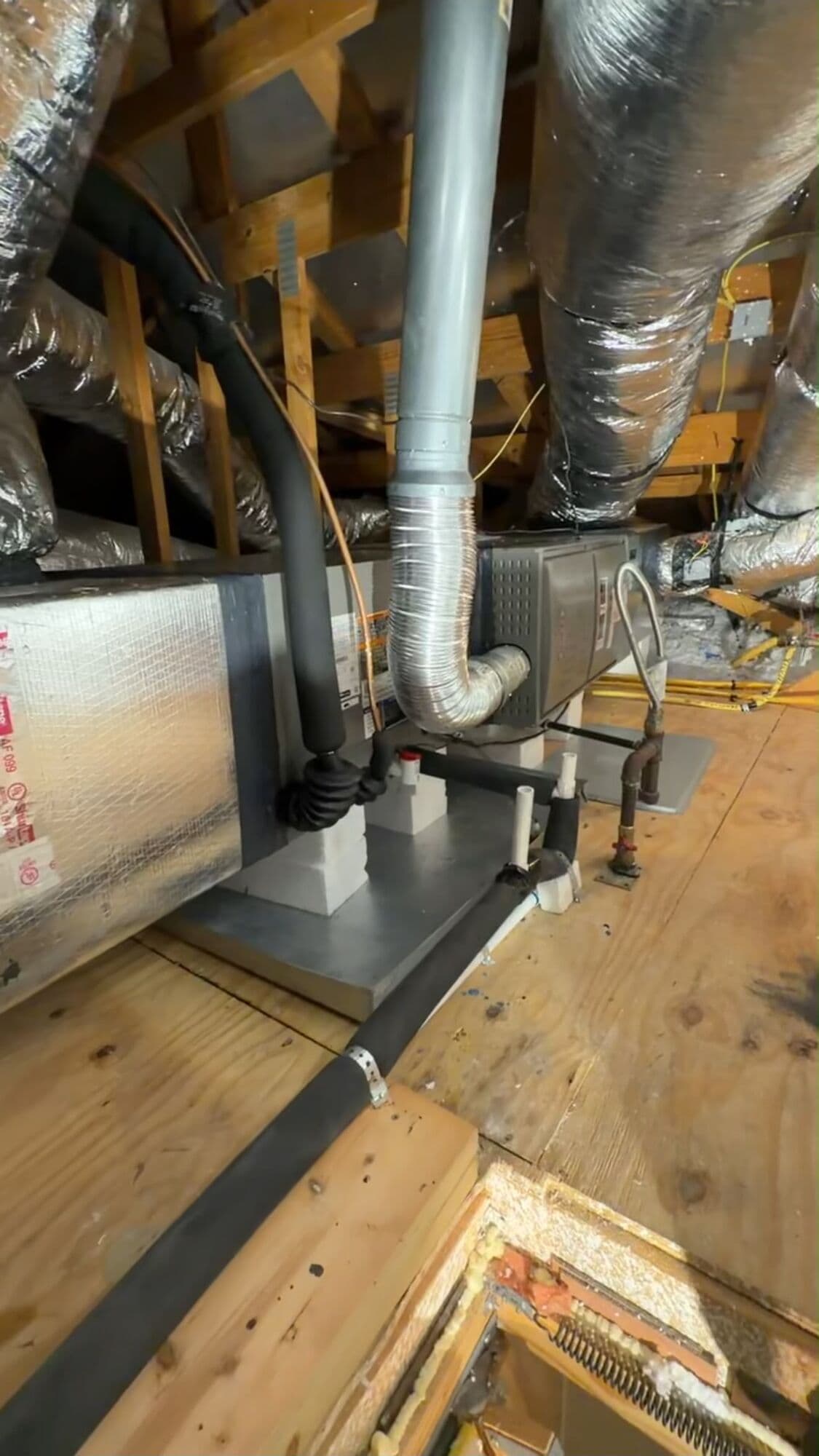
Attic air handler and insulated supply plenum on a plywood platform, with a flexible flue connector, PVC condensate lines and an insulated refrigerant line set running out across the decking.
02

Check the ducts before you pick the box

Equipment can only move the air the duct system lets it move. Undersized returns and crushed attic runs turn a correctly sized condenser into an underperforming one, and no amount of SEER on the sticker fixes a static pressure problem. Static gets measured before the quote, not after the complaint.

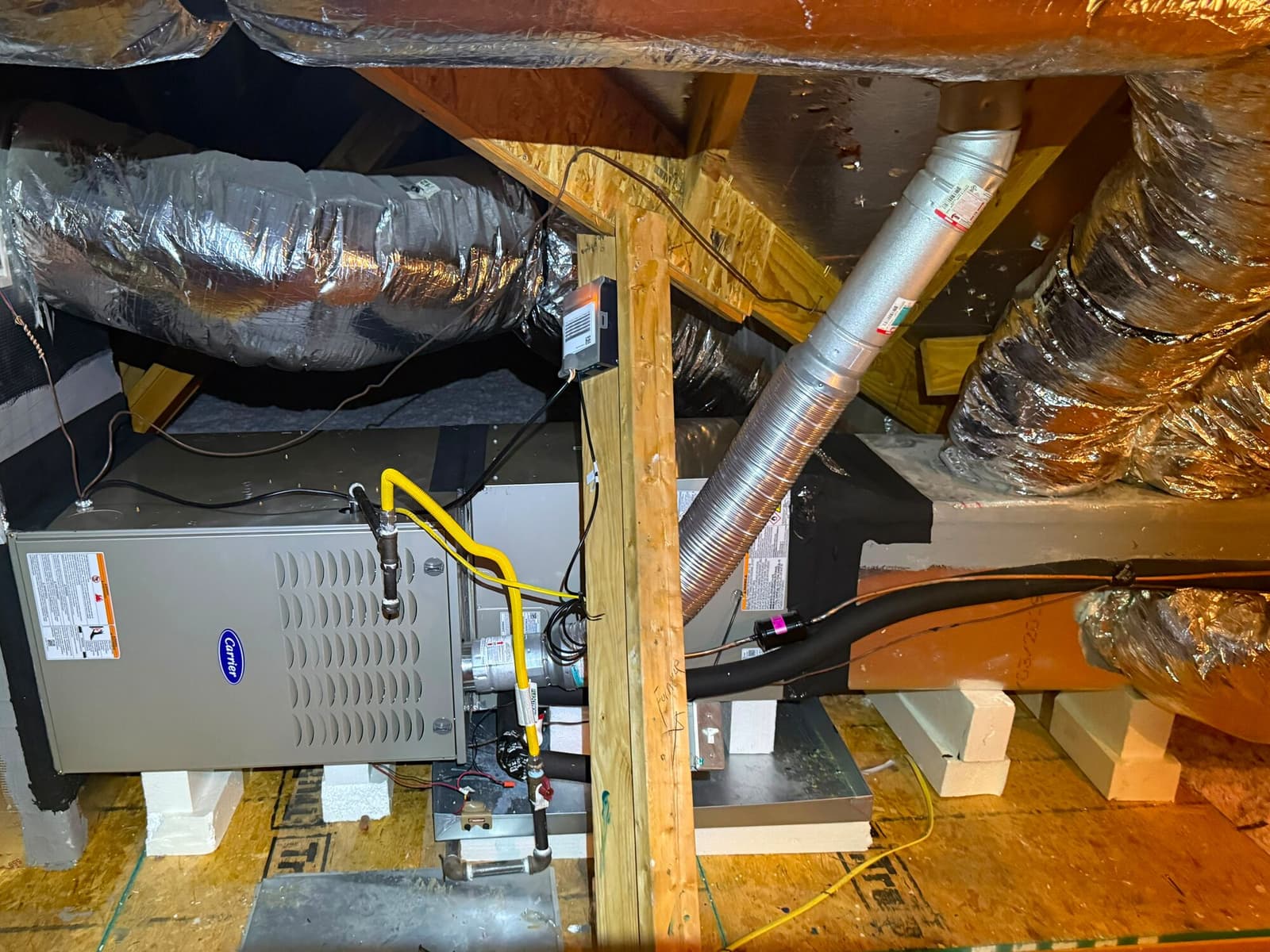
Carrier gas furnace standing on an attic platform, with a yellow flexible gas connector, a metal flue rising through the framing and insulated flex duct runs overhead.
03

Nitrogen, vacuum, then charge

Brazing under flowing nitrogen keeps scale out of the tubing. A deep vacuum, held and verified, pulls the moisture out that would otherwise combine with oil and refrigerant to make acid. Then the charge is weighed for the line set length and checked against superheat and subcooling. Skip any of the three and the system still starts — it just does not last.

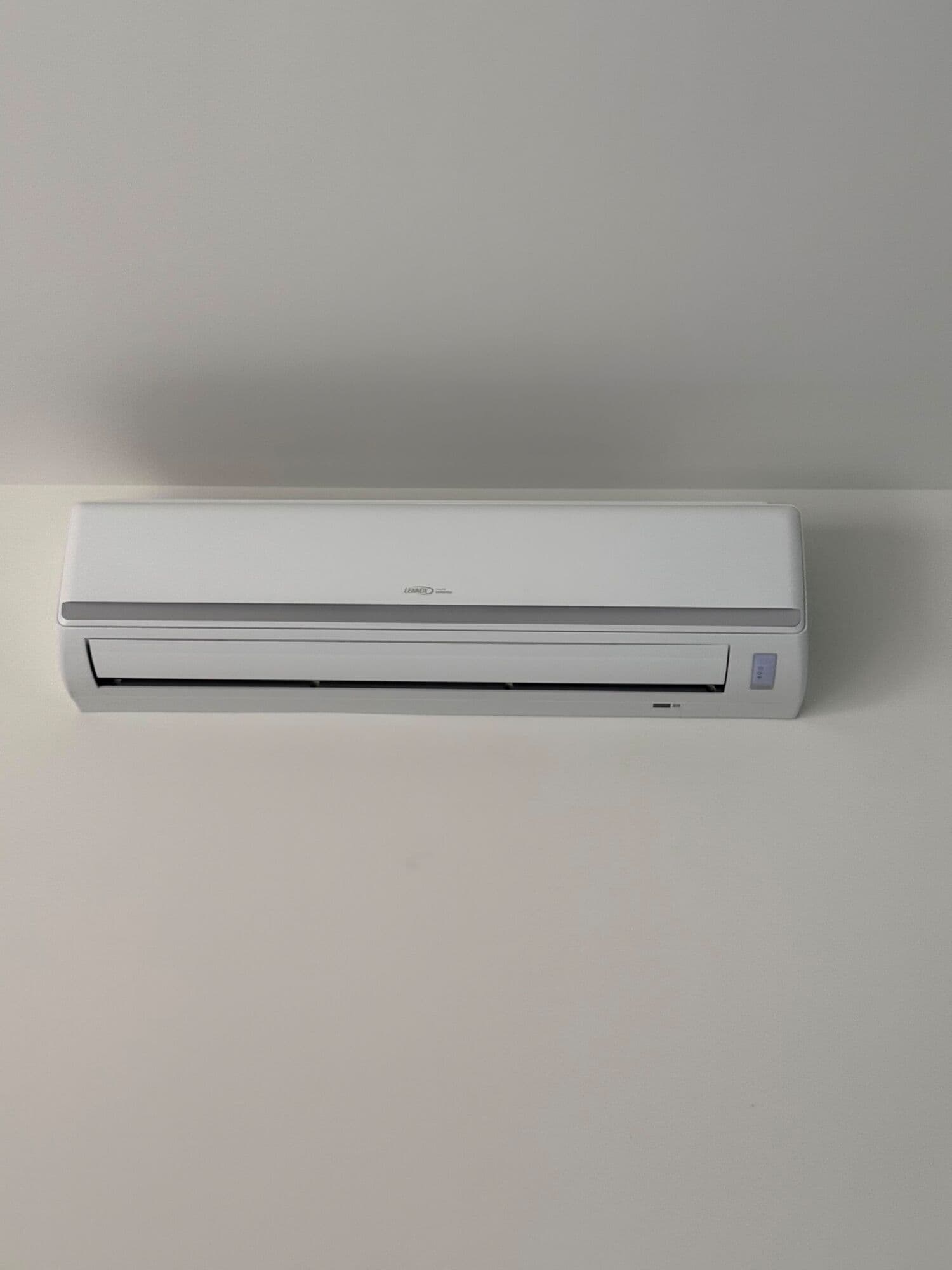
Lennox ductless mini-split head mounted high on a plain white interior wall, louver closed, with no exposed pipework on the finished face of the wall.
04

Prove it at the register

The last step is measuring what actually reaches the rooms: temperature split, airflow, and whether the far bedroom gets anything at all. A system that reads correct at the air handler and wrong at the register is a system nobody finished commissioning.

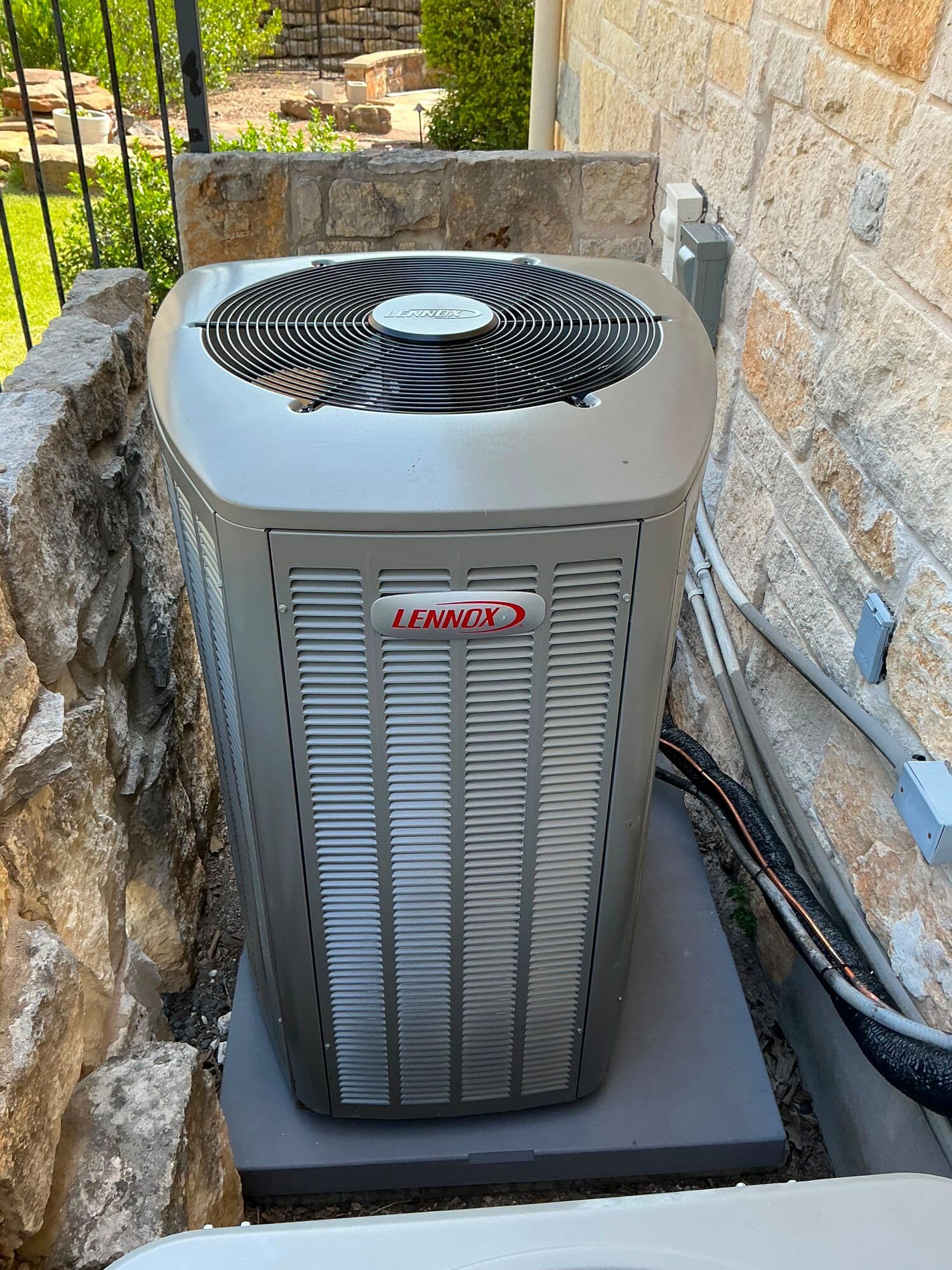
Lennox condensing unit on a pad against a Texas limestone wall, its refrigerant line set and electrical disconnect run up the stone, with an iron fence and green lawn behind it.
Carrier gas furnace standing on an attic platform, with a yellow flexible gas connector, a metal flue rising through the framing and insulated flex duct runs overhead.
Attic air handler and insulated supply plenum on a plywood platform, with a flexible flue connector, PVC condensate lines and an insulated refrigerant line set running out across the decking.
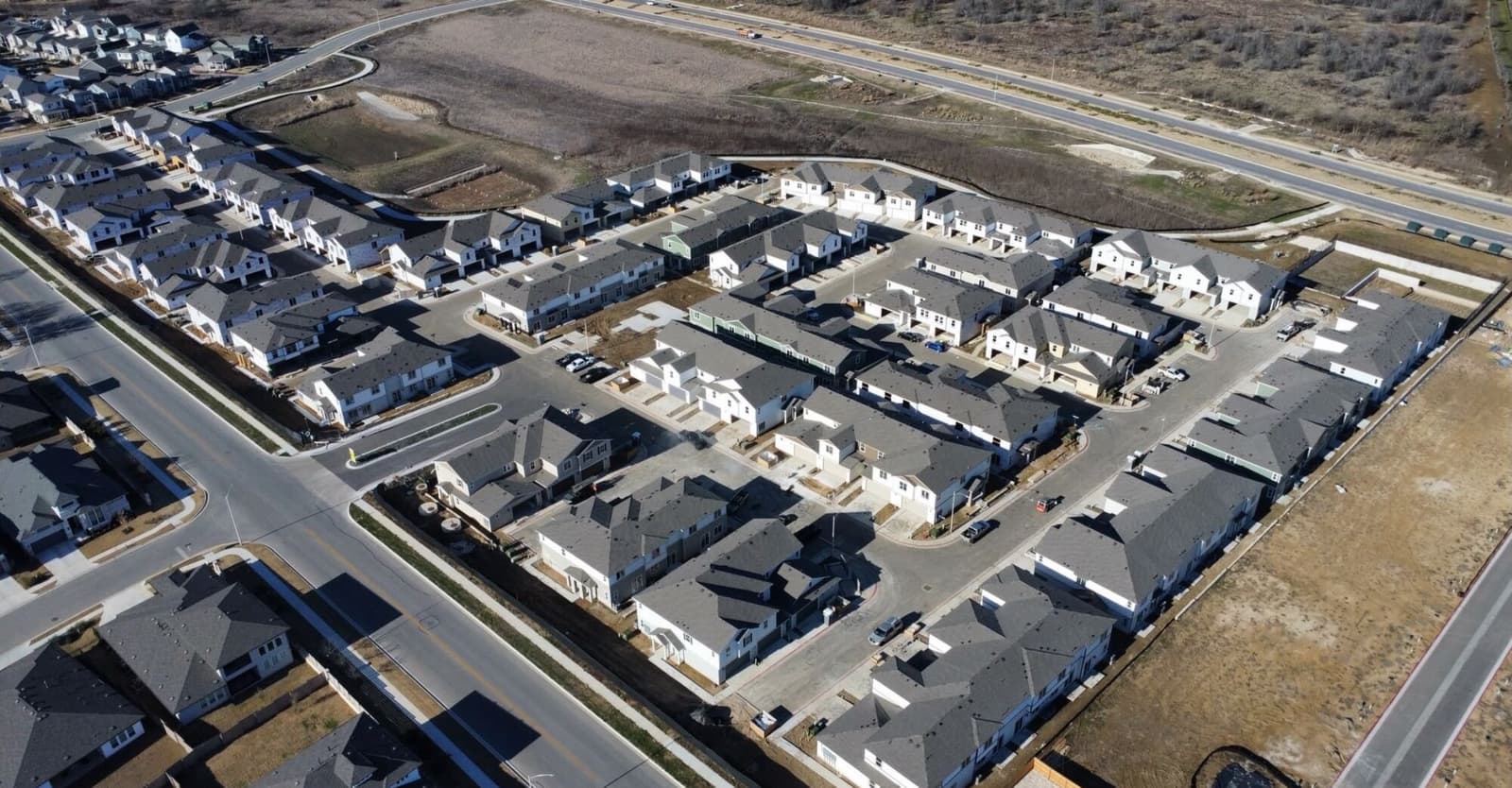
Aerial view over a new Central Texas subdivision — rows of finished and part-built houses on fresh streets, with open field and a highway beyond.

The work

AC Installation & Replacement in detail.

Photographs from our own Central Texas jobs — a closer look at the equipment, the install detail, and the parts that decide whether a system lasts.

Full gallery
Three Lennox condensing units lined up down the side yard of a modern stucco house, between a new cedar fence and a river-rock bed, with the electrical disconnect on the wall.
Lennox condensing unit on a pad against a Texas limestone wall, its refrigerant line set and electrical disconnect run up the stone, with an iron fence and green lawn behind it.
Carrier gas furnace standing on an attic platform, with a yellow flexible gas connector, a metal flue rising through the framing and insulated flex duct runs overhead.
Attic air handler and insulated supply plenum on a plywood platform, with a flexible flue connector, PVC condensate lines and an insulated refrigerant line set running out across the decking.
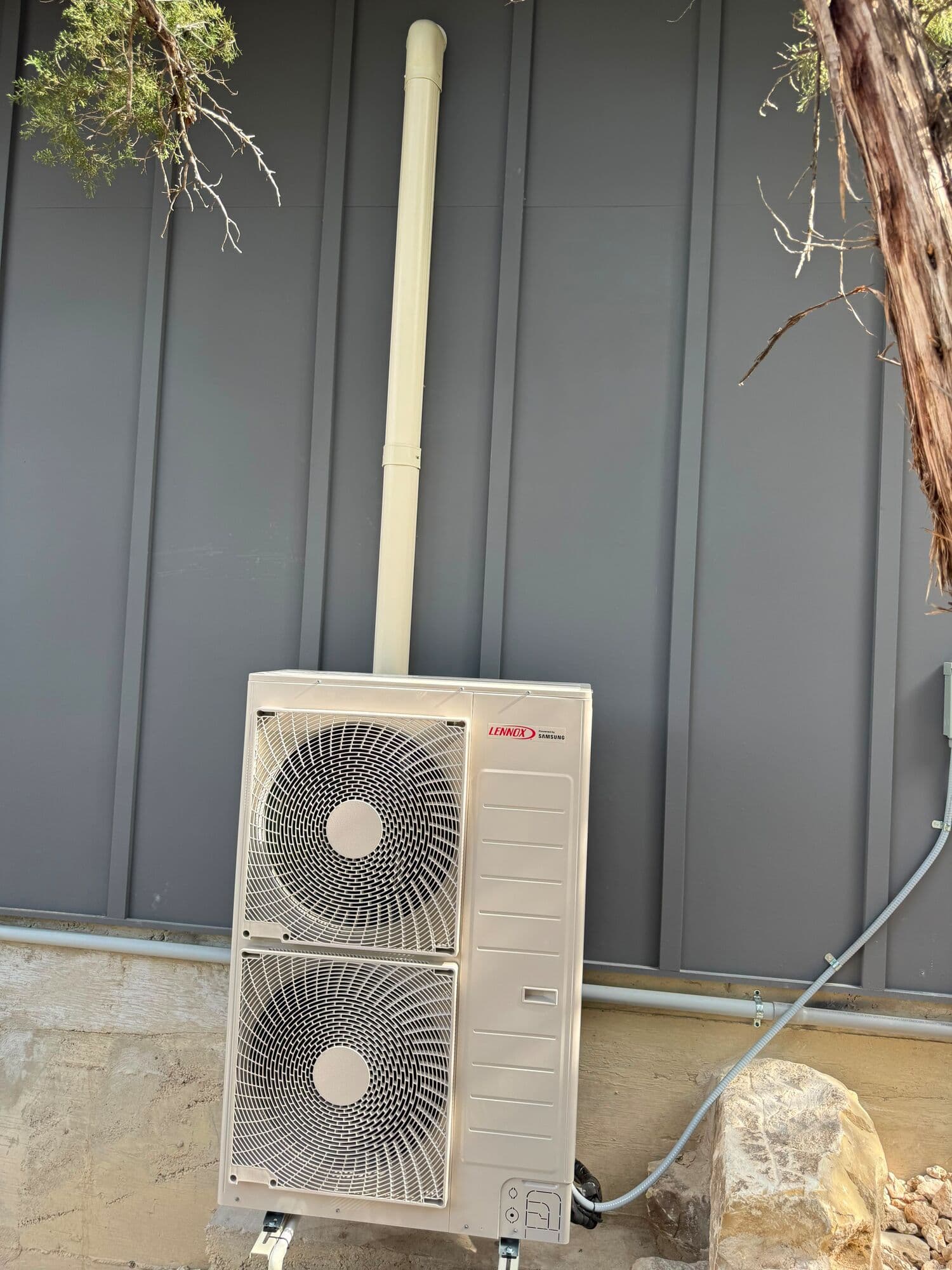
Two-fan Lennox mini-split condensing unit mounted against a grey metal-panel wall, its line-set chase running straight up the panel to the roof and a disconnect box beside it.
Aerial view over a new Central Texas subdivision — rows of finished and part-built houses on fresh streets, with open field and a highway beyond.

Questions about this work

AC Installation & Replacement straight answers.

How do I know when to replace instead of repair?

The honest test is the size of the repair against the remaining life. A capacitor on an eight-year-old system is a repair. A compressor or a leaking evaporator coil on a system that has already done a decade of Texas summers is usually money spent on a machine that will ask again next year. We will show you the reasoning either way, including when the answer is repair it.

Can I just get the same size as what I have now?

You can, and a lot of contractors will. But if the original was oversized — very common here — you inherit the humidity problem for another fifteen years. A load calculation costs almost nothing next to the equipment and it is the difference between cold-and-clammy and actually comfortable.

Do I need new ductwork with a new system?

Sometimes, and it is worth knowing before rather than after. If the returns are undersized or the attic runs are crushed, kinked or disconnected, new equipment will not fix the room that never cools. We measure the duct system as part of quoting the job, and tell you what it actually needs.

What does a new system cost?

It is quoted per job — the type of system, the equipment required, the installation conditions and the work involved all move the number, and we are not going to publish a figure that is not real for your house. What we can tell you is that the quote is written, itemised and given before anything is ordered.

Carrier gas furnace standing on an attic platform, with a yellow flexible gas connector, a metal flue rising through the framing and insulated flex duct runs overhead.

Service call · $100

Get a technician out to look at it properly.

Call or text (512) 840-8112. The service call is a flat $100 — a technician comes out, evaluates the system and identifies the issue. If you approve the repair, the $100 is credited toward it. If you decide against the repair, the $100 stands as the fee for the visit. Repairs, replacements and installations are quoted from what we actually find.

ATX Clima LLC · Austin, TX

Call nowRequest service