Ductwork & airflow
Ductwork repair and airflow balancing in Austin, TX.
Undersized returns, crushed attic flex, disconnected boots and leaking plenums throw away capacity you already paid for. Ducts are measured, not guessed at.
Who this is for
Homes with one room ten degrees off the thermostat, houses that were remodelled or added onto, anyone whose new system did not fix the old problem, and buildings with high energy bills and no obvious equipment fault.
The detail
What this work actually involves.
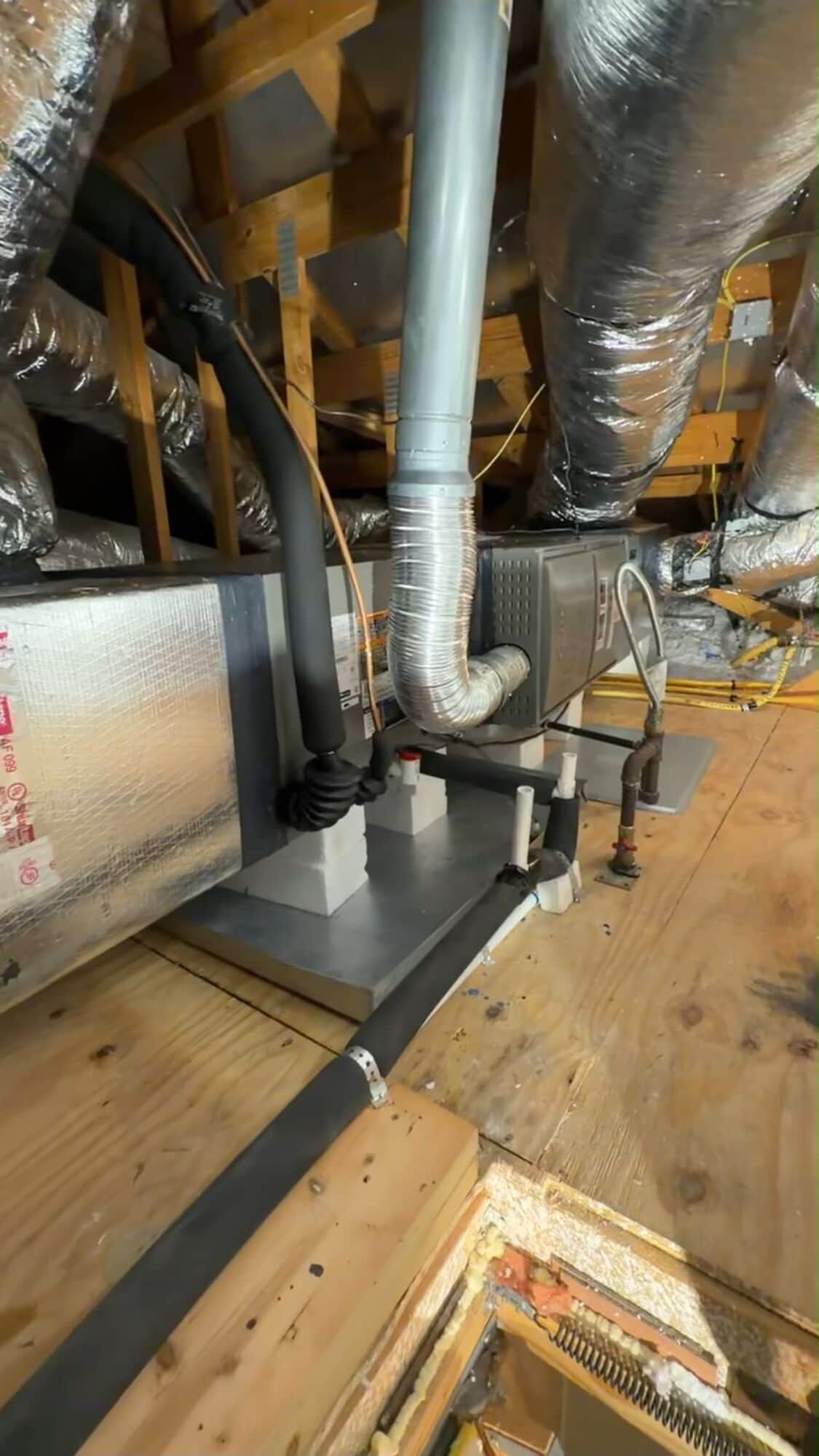
In most Central Texas houses the ductwork lives in the attic, which for four months a year is the hottest place on the property. A duct system up there is doing two jobs badly at once: leaking conditioned air into a space that is already 140 degrees, and gaining heat through insulation that was never great to begin with. It is genuinely common for a house to lose a meaningful share of the capacity it is paying for between the air handler and the register — and none of it shows up as an equipment fault.
The mechanical failures are just as ordinary. Flex duct crushed under storage boxes or kinked around a truss. A boot that pulled loose from the ceiling drywall years ago and has been feeding the attic ever since. Returns sized for a system two sizes smaller than the one that eventually got installed, so the blower is fighting static pressure it was never designed for. A plenum sealed with duct tape, which is the one material in the building that will not stay stuck to sheet metal in an attic.
The reason this matters is that it is invisible from the thermostat. High static pressure raises the blower's power draw, drops the airflow across the evaporator, and makes the coil colder and more likely to ice — which then looks exactly like a refrigerant problem. Measuring static pressure and actual airflow separates the two in minutes, and it is the reason we look at the duct system on repair calls, not only when someone asks for duct work.
What's included
Ductwork & Airflow, line by line.
- Static pressure measured across the system, supply and return
- Airflow checked at the equipment and at the registers
- Return capacity assessed against the installed equipment
- Crushed, kinked and disconnected flex duct repaired or replaced
- Boots and takeoffs re-sealed at the ceiling and at the trunk
- Plenums and trunk seams sealed with mastic rather than tape
- Duct insulation repaired or upgraded where attic gain is the problem
- Additional supplies or returns added where a room is genuinely starved
- Balancing dampers set so the far rooms actually get their share
The work
Ductwork & Airflow in detail.
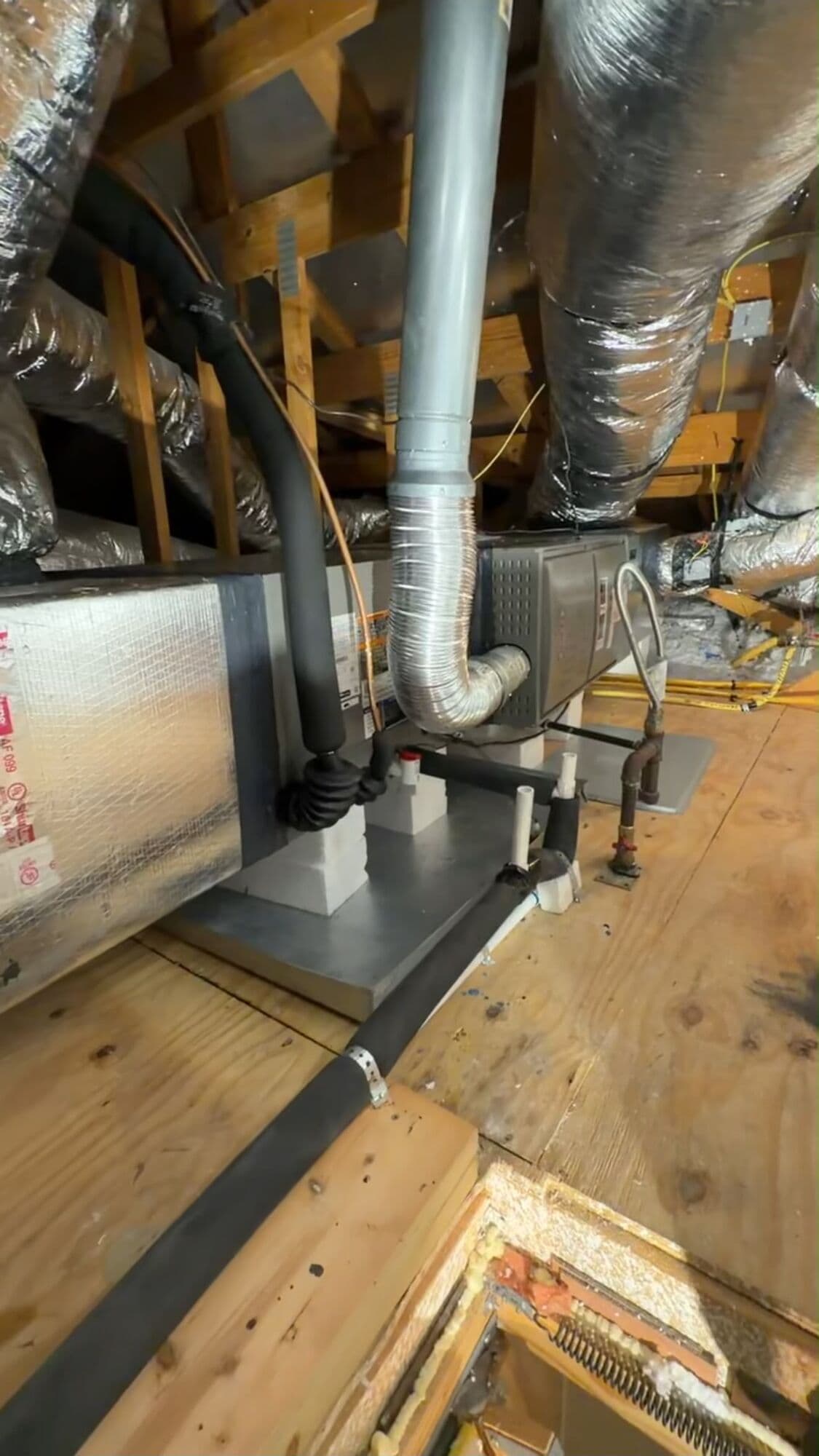
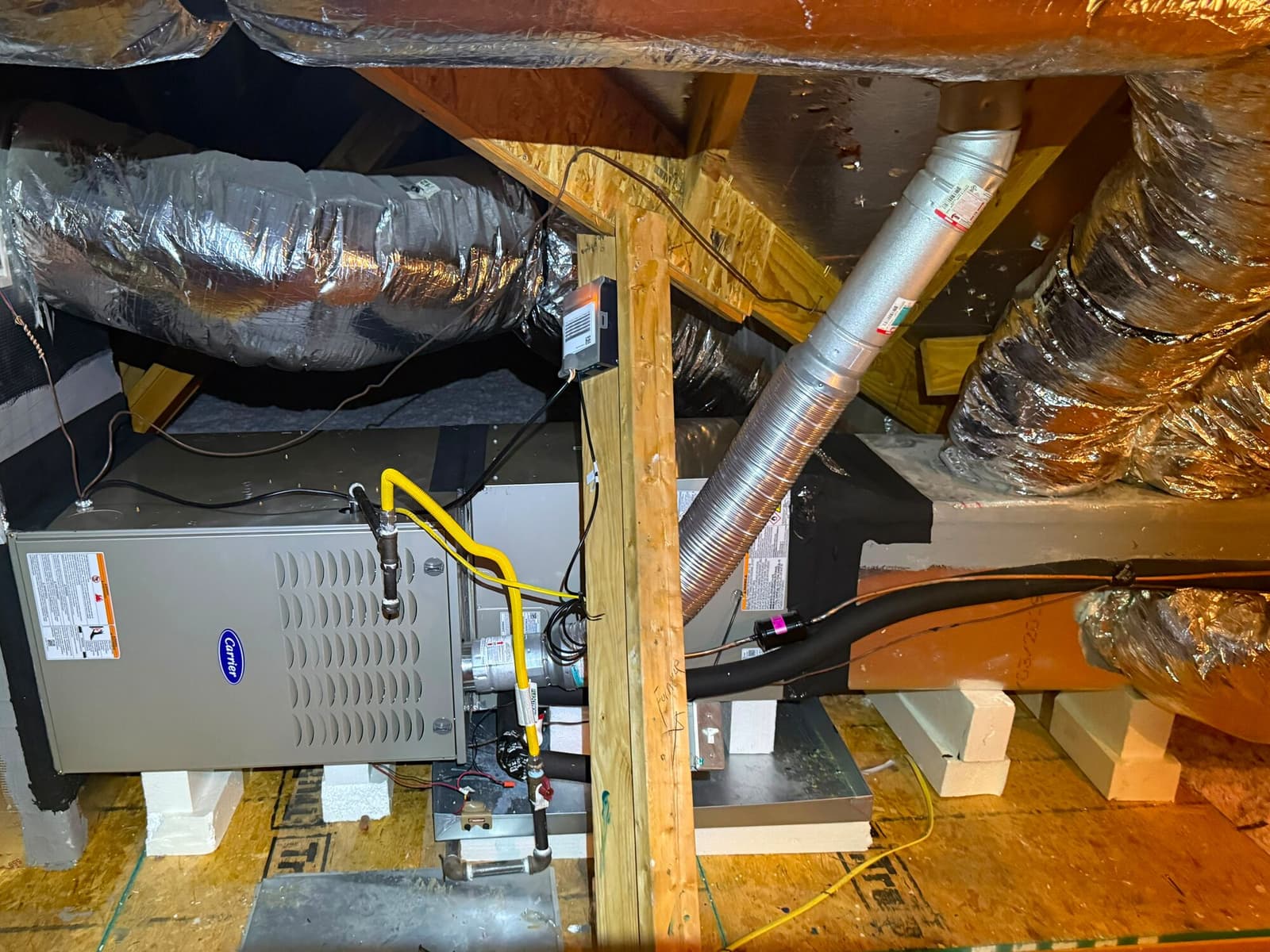
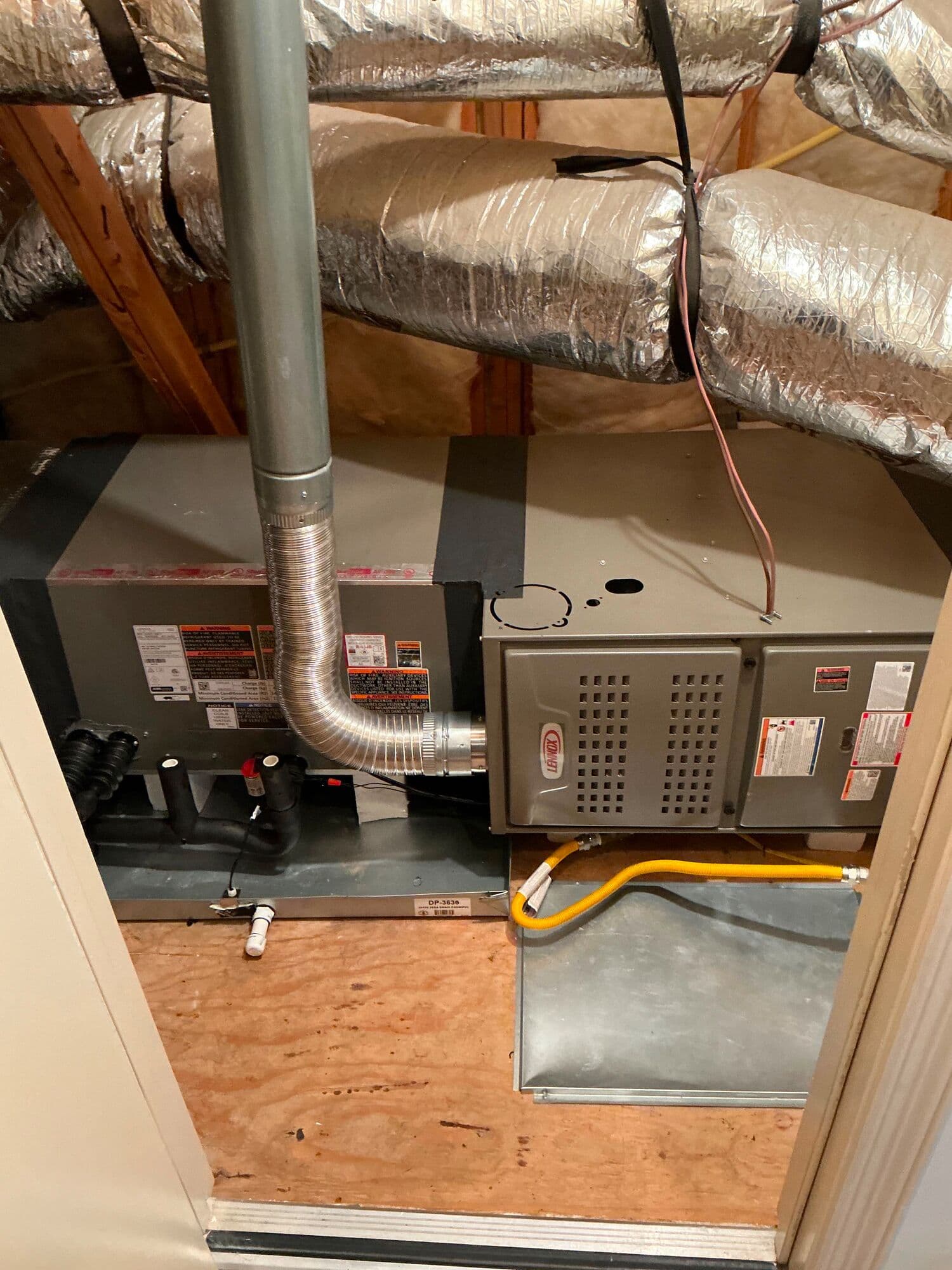
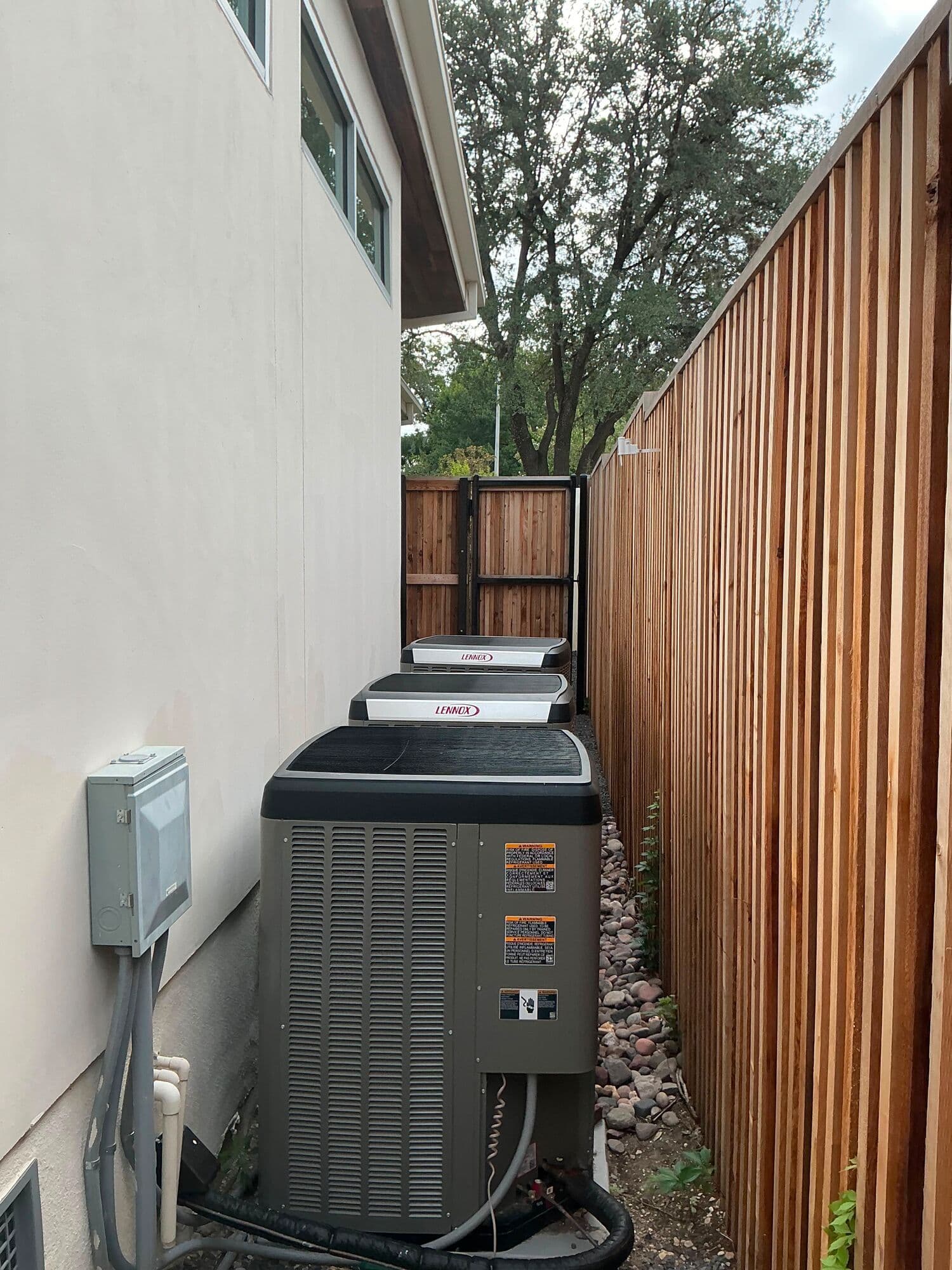
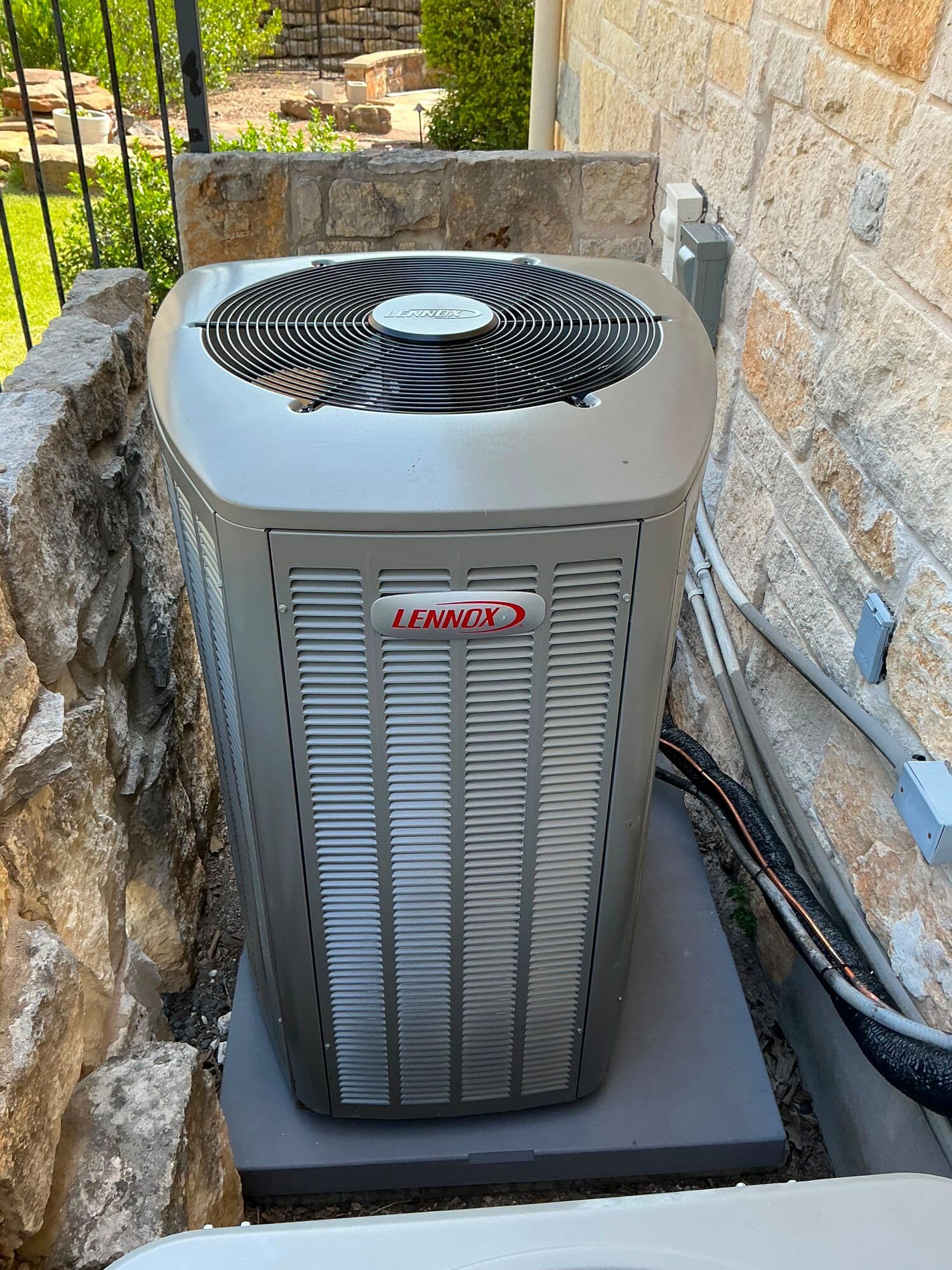
Photographs from our own Central Texas jobs — a closer look at the equipment, the install detail, and the parts that decide whether a system lasts.
Questions about this work
Ductwork & Airflow — straight answers.
One bedroom is always ten degrees warmer. Will a bigger AC fix it?
Almost never, and a bigger system will usually make the rest of the house worse. If a room is starved, the problem is between the equipment and that room: duct size, run length, a crushed section, a disconnected boot, or no return path so the air cannot get back out. That is a duct fix, not an equipment fix.
How do you know the ducts are the problem?
We measure. Static pressure across the system and airflow at the registers tell you very quickly whether the equipment is being strangled or whether it is genuinely underperforming. It takes a fraction of the time that guessing does.
Is duct cleaning the same as duct repair?
No, and they get confused constantly. Cleaning removes debris from inside the duct. Repair fixes the leaks, restrictions and sizing that are costing you capacity. Cleaning a leaking, crushed duct system leaves you with a clean, leaking, crushed duct system.
Should ductwork be replaced with a new system?
Only if it needs it — and a lot of it does not. What matters is that somebody looks before the equipment is ordered, because a new system connected to a duct system that cannot support it disappoints everybody involved.
Related services
Service call · $100
Get a technician out to look at it properly.
Call or text (512) 840-8112. The service call is a flat $100 — a technician comes out, evaluates the system and identifies the issue. If the repair or replacement you approve comes to $500 or more, the $100 is credited toward it. Otherwise — including if you decide against the work — the $100 stands as the fee for the visit. Repairs, replacements and installations are quoted from what we actually find.
ATX Clima LLC · Austin, TX