Ductless mini-splits
Ductless mini-split installation in Austin, TX.
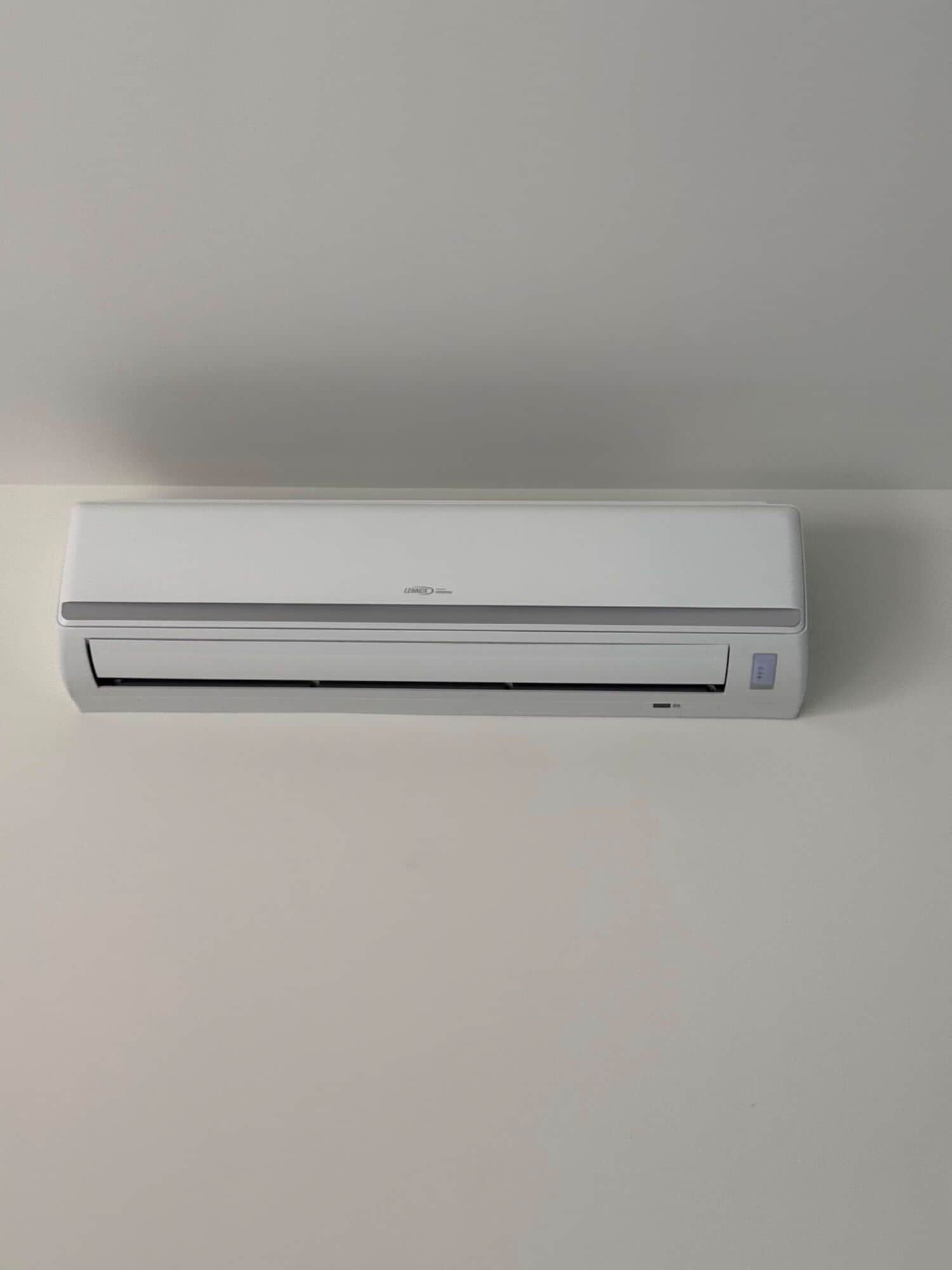
One outdoor unit, one or more wall heads, no ducts to lose air in. The right answer for the room that has never been comfortable and never will be on the main system.
Who this is for
Garage conversions, added rooms, ADUs and casitas, sunrooms, attic offices, metal shop buildings, server closets, and any room the central system has never been able to hold.
The detail
What this work actually involves.
There is a room in a lot of Central Texas houses that has never worked: the converted garage, the addition that was tied into a duct trunk that was already at capacity, the sunroom with three exterior walls and a wall of glass, the attic office over the garage. Adding a bigger central system does not fix it, because the problem is not capacity at the equipment — it is that the duct system cannot deliver capacity to that room, and often that the room's load has nothing to do with the rest of the house.
A ductless mini-split solves it by removing the ductwork from the equation. An outdoor condenser connects to one or more indoor heads through a small refrigerant line set and a condensate drain, with a three-inch hole through the wall. There is no duct run to leak into a 140-degree attic, no trunk to share, and the head has its own thermostat, so the room gets what the room needs. Because they are inverter-driven, they also modulate rather than cycling on and off, which is a genuine advantage in a humid climate — long, low-output run time is what actually removes moisture.
They are not the right answer everywhere. A whole open-plan house with existing decent ductwork is usually better served by a central system. Multi-zone setups get complicated when the zones have wildly different loads, and a head that is oversized for a small room short-cycles the same way any oversized equipment does. The install details matter more than people expect: line set routing and length, a condensate path that actually drains (or a pump that will not fail silently), head placement that does not blow straight at a desk, and a wall penetration that is properly sealed against Texas humidity and insects.
What's included
Ductless Mini-Splits, line by line.
- Single-zone and multi-zone ductless systems
- Room-by-room sizing so the head is not oversized for the space
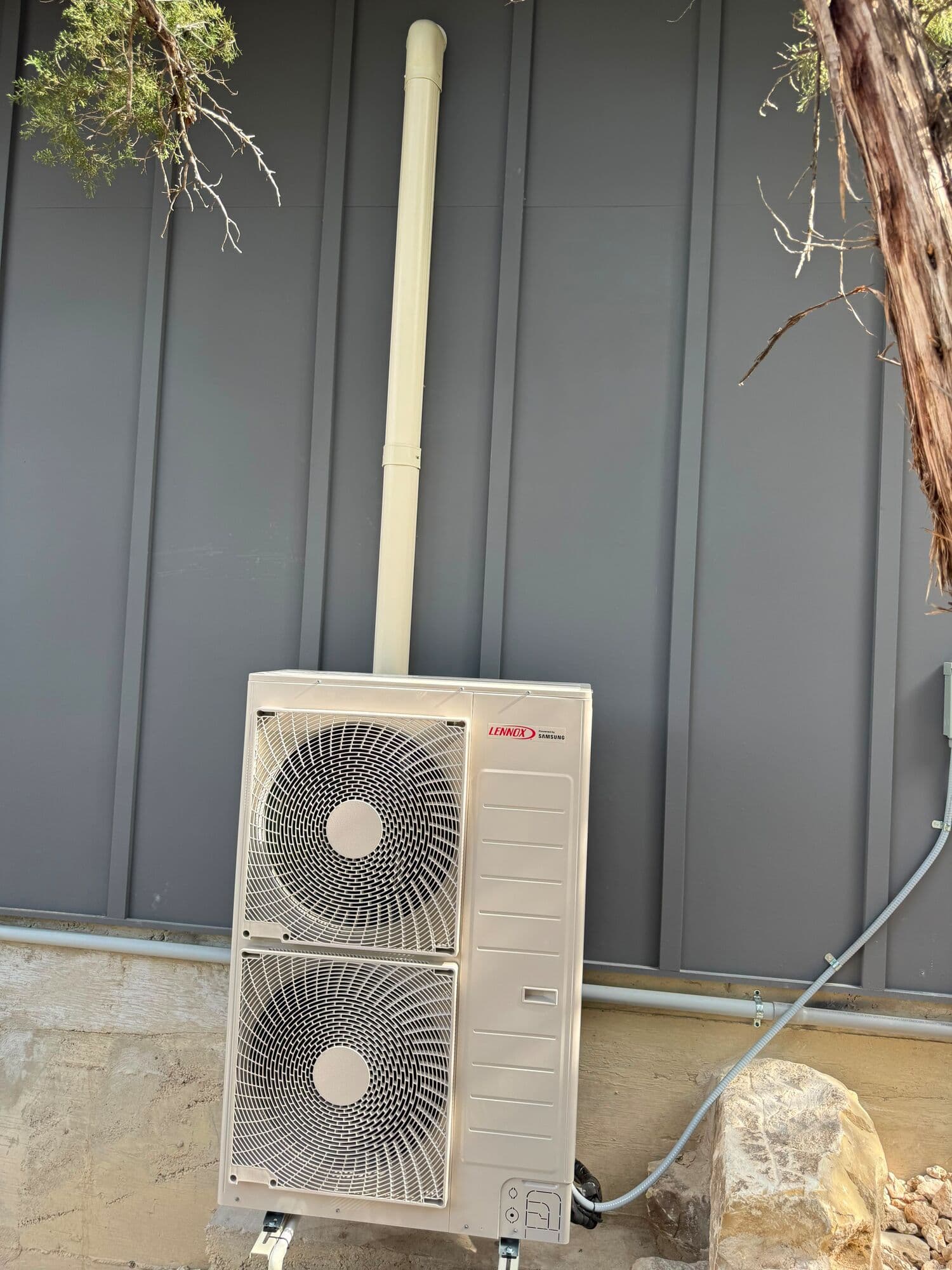
- Outdoor unit set on a pad or wall bracket with proper clearance
- Line set routed and covered, with line hide where it is visible from outside
- Wall penetration sealed against air, water and insects
- Condensate drained by gravity where possible, pumped where it is not
- Vacuum pulled and charge verified — not just released from the pre-charge
- Head placement planned for airflow rather than the easiest wall
- Garage, shop, casita, addition, sunroom and small office applications
The work
Ductless Mini-Splits in detail.
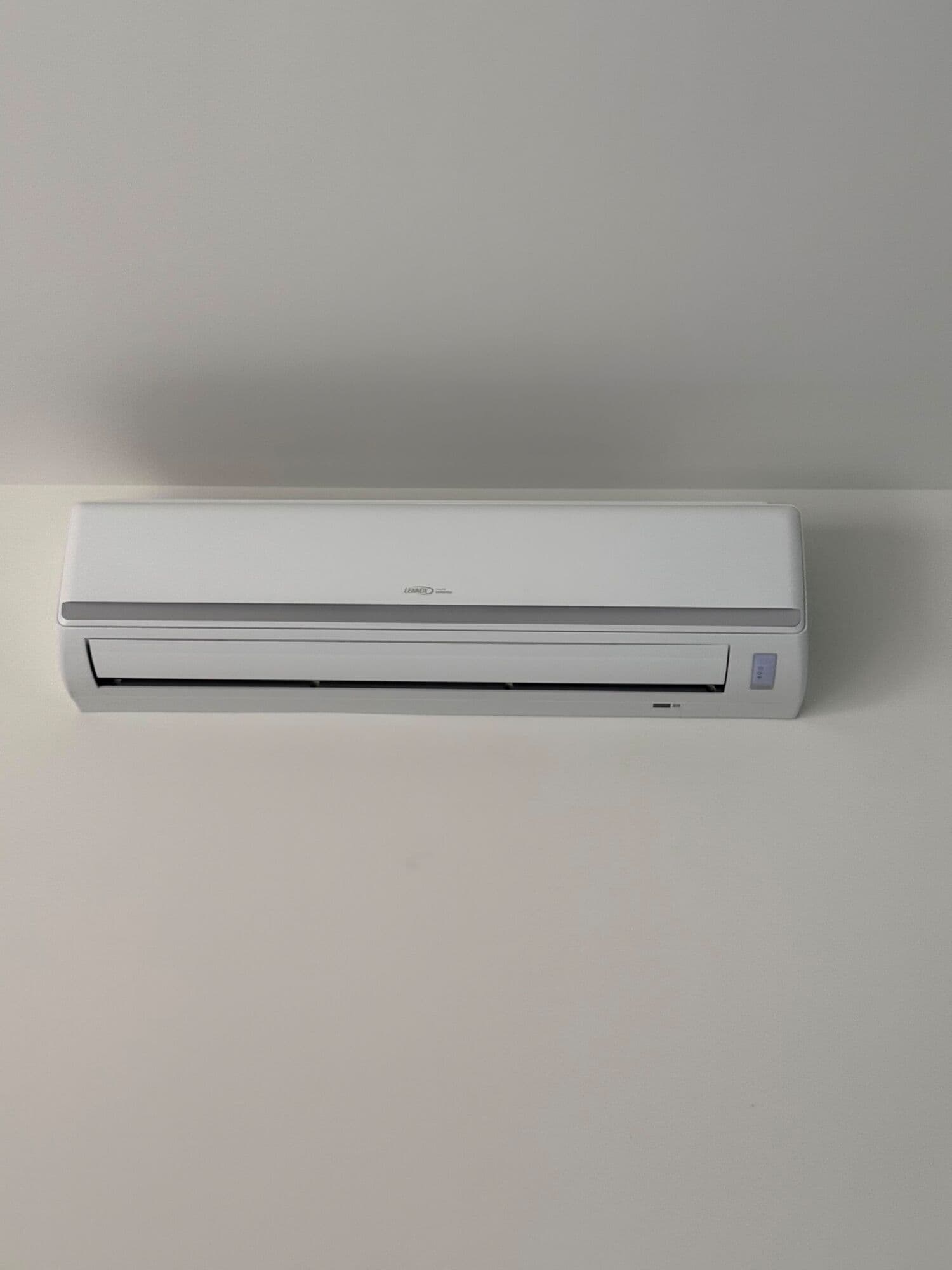
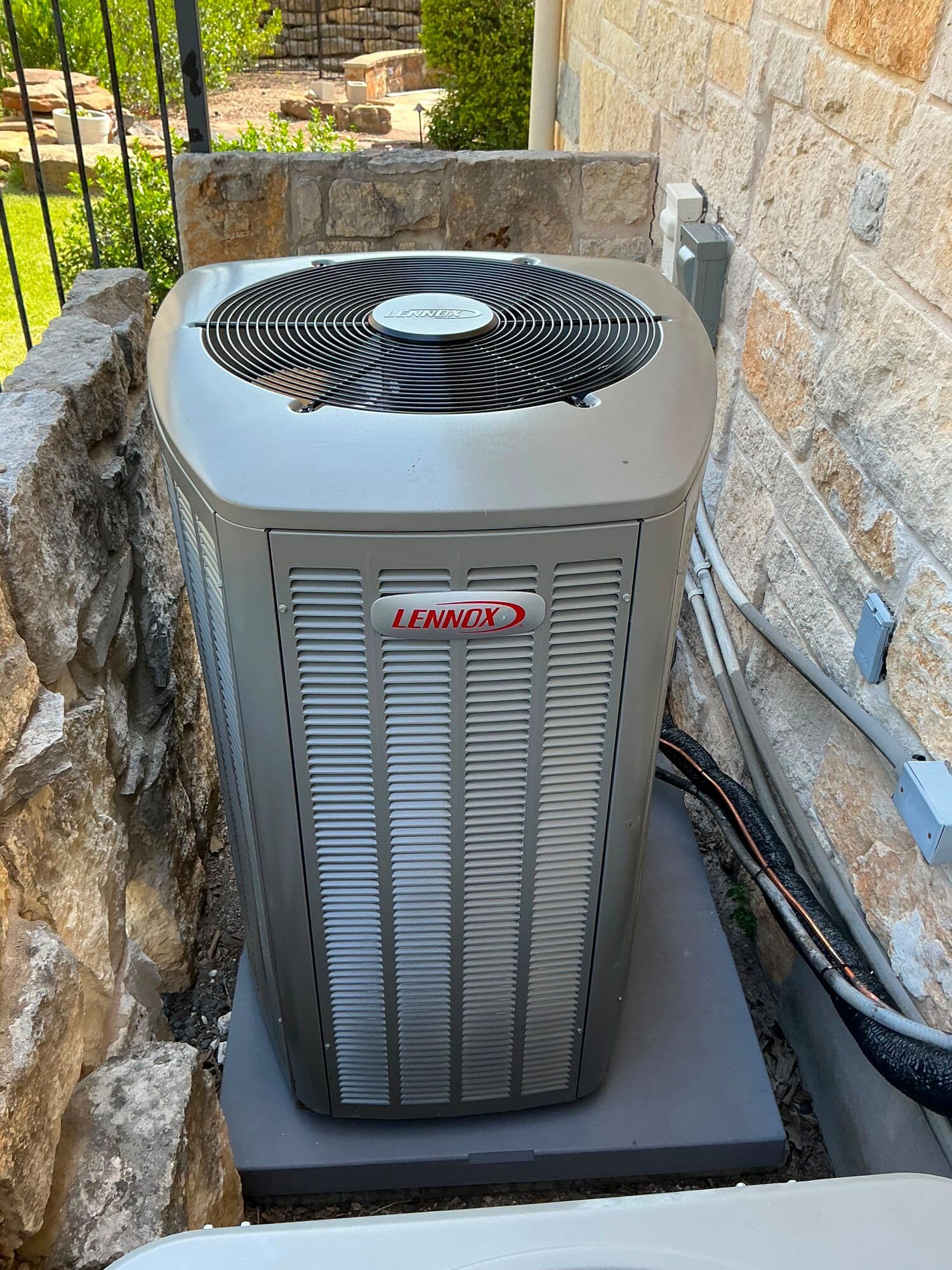
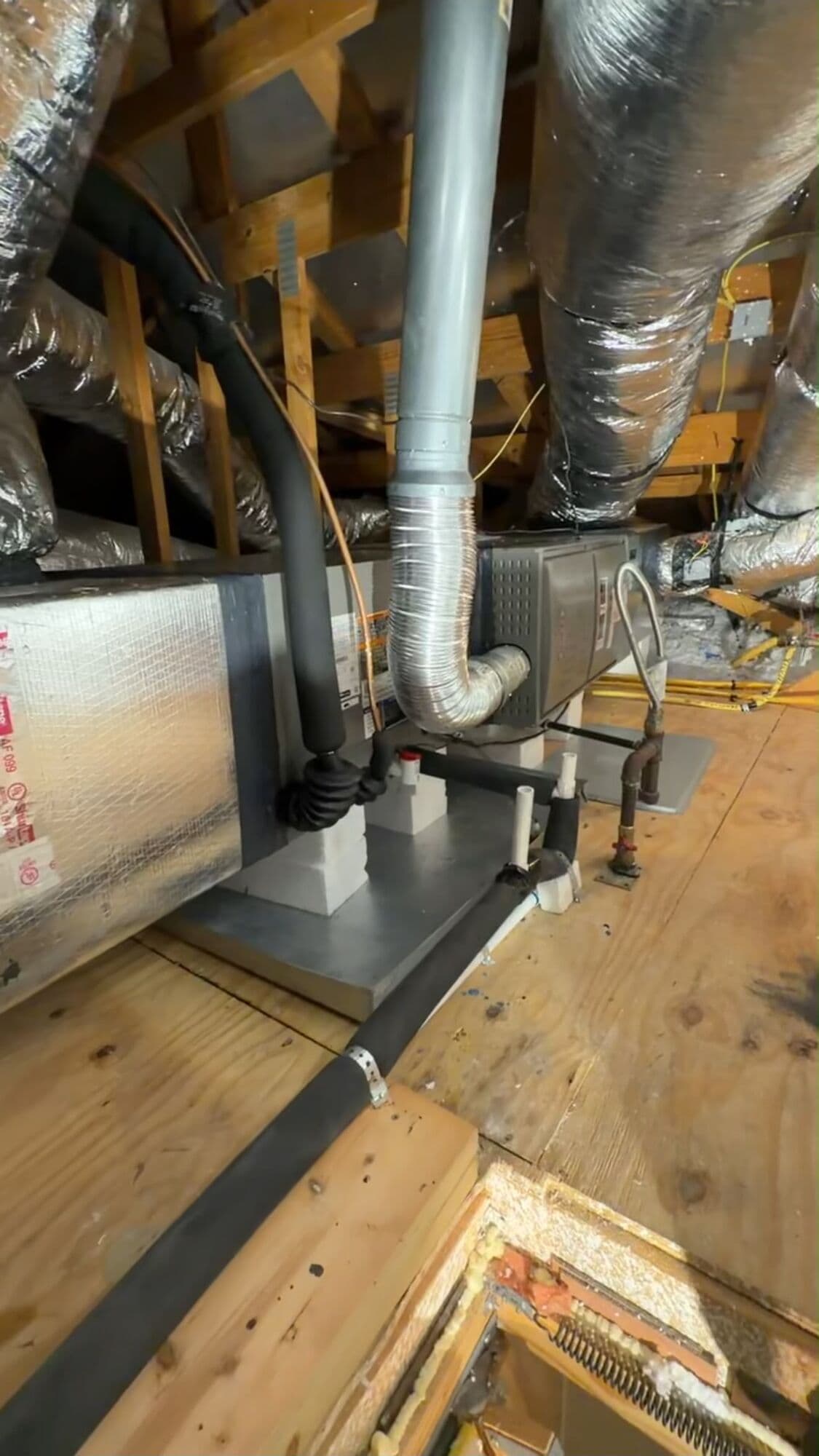
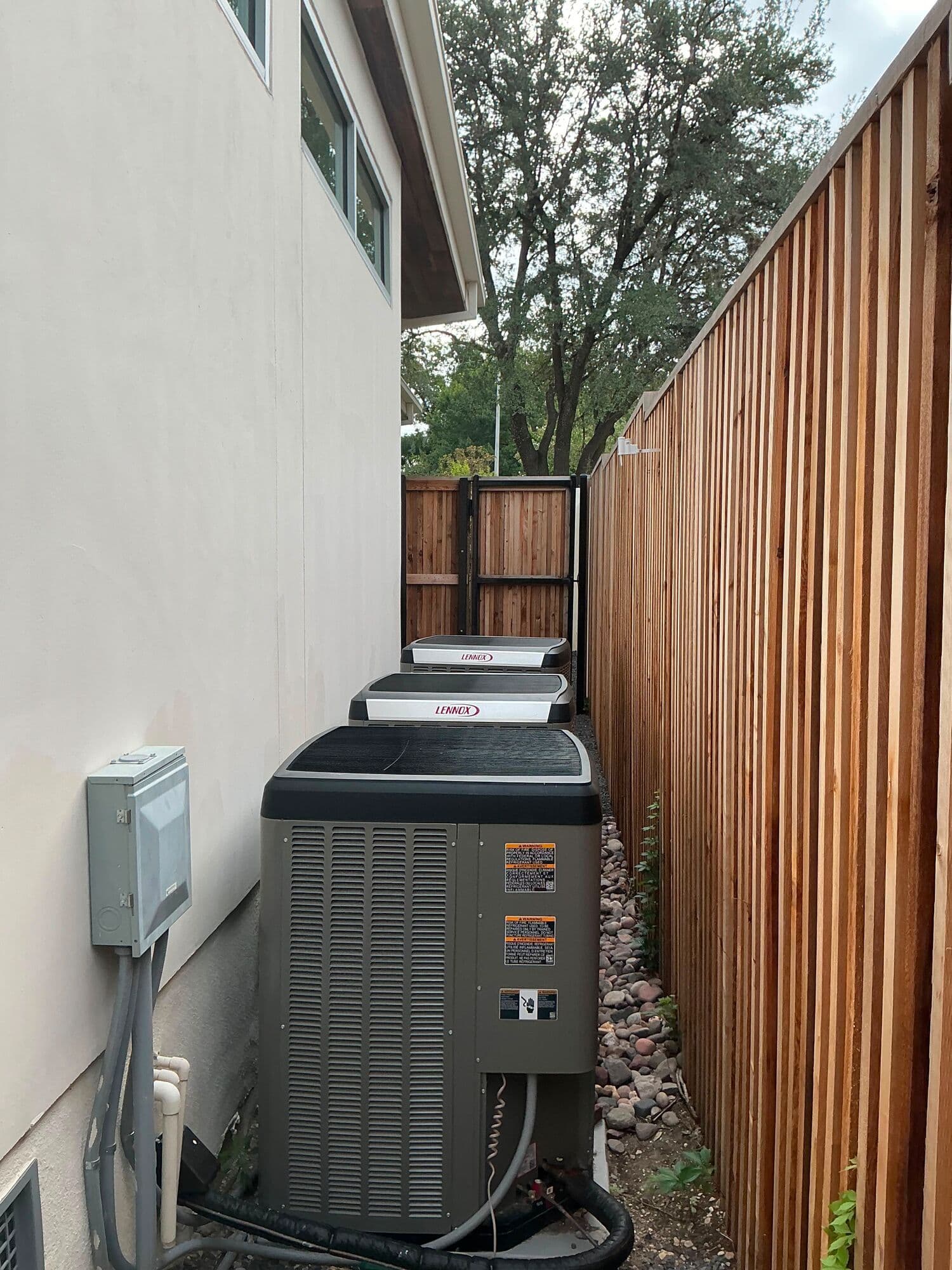
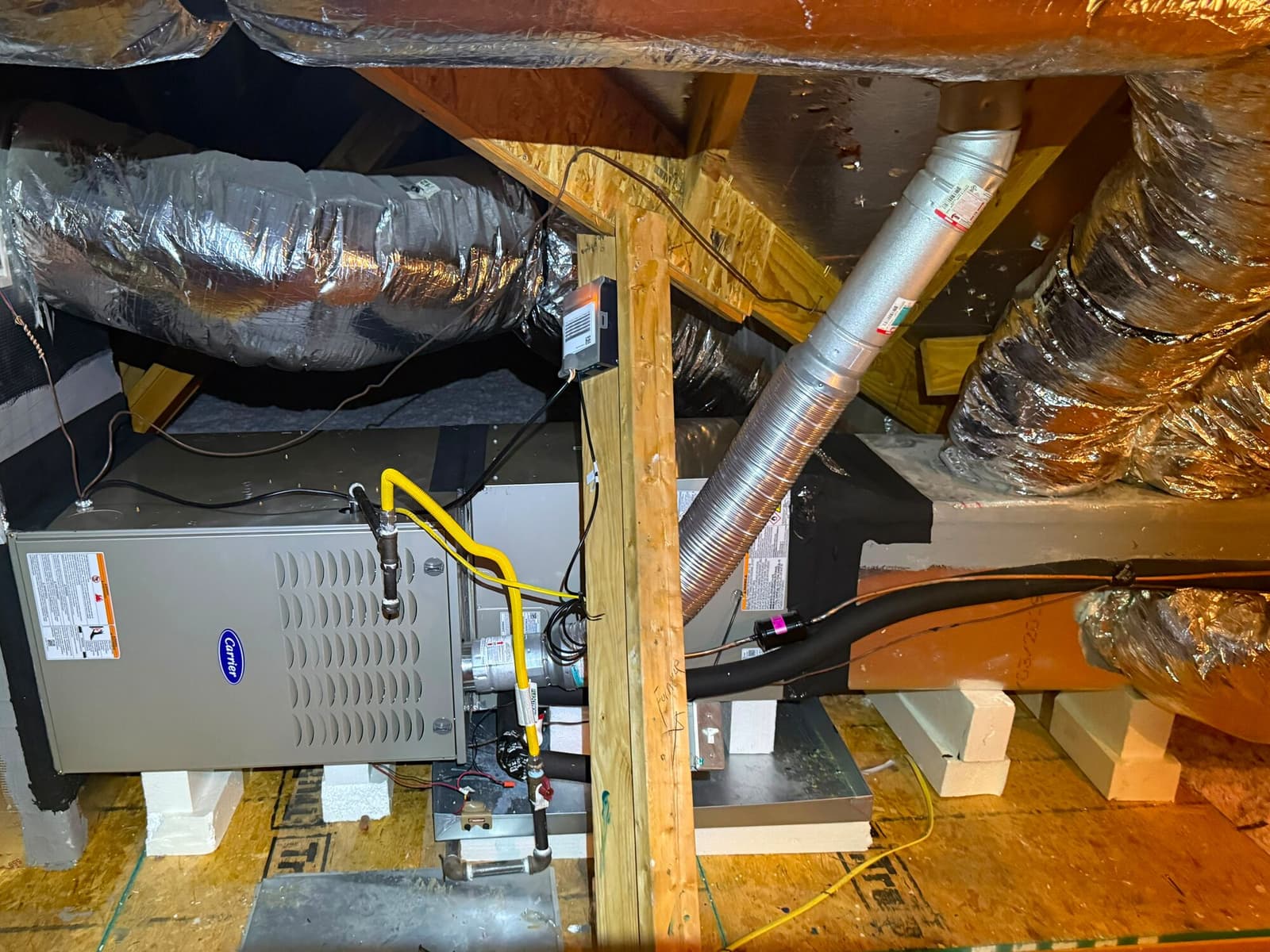
Photographs from our own Central Texas jobs — a closer look at the equipment, the install detail, and the parts that decide whether a system lasts.
Questions about this work
Ductless Mini-Splits — straight answers.
Will a mini-split cool a Texas garage?
It can, but the building has to cooperate. An uninsulated garage with an uninsulated roll-up door is an enormous load, and the honest answer is that insulation and sealing the door come first. Once the envelope is reasonable, a correctly sized head handles it well — and it heats the space in winter too.
How many indoor heads can one outdoor unit run?
That depends on the equipment and the loads involved. What matters more than the maximum is whether the zones make sense together — heads sized for very different loads on one condenser can leave the small zone short-cycling. We would rather plan that properly than max out a spec sheet.
Are mini-splits noisy?
The indoor heads are quiet — usually quieter than the airflow noise from a central system's registers. The outdoor unit makes about as much noise as a small condenser, which is worth thinking about if it lands under a bedroom window.
Can a mini-split replace my whole central system?
Sometimes, in the right house — open plans, additions on additions, or homes where the ductwork is beyond saving. Often it is better as a supplement to a central system rather than a replacement. We will tell you which situation you are in before you spend anything.
Related services
Service call · $100
Get a technician out to look at it properly.
Call or text (512) 840-8112. The service call is a flat $100 — a technician comes out, evaluates the system and identifies the issue. If the repair or replacement you approve comes to $500 or more, the $100 is credited toward it. Otherwise — including if you decide against the work — the $100 stands as the fee for the visit. Repairs, replacements and installations are quoted from what we actually find.
ATX Clima LLC · Austin, TX