Heat pumps · Install & service
Heat pump installation and repair in Austin, TX.
A heat pump is an air conditioner that can run backwards, and Central Texas winters are exactly the conditions it is good at. Installed, serviced and repaired.
Who this is for
All-electric homes, anyone without a gas line, houses where the furnace and AC are both due at once, and owners replacing electric-strip heat with something that costs less to run.
The detail
What this work actually involves.
A heat pump is the same refrigeration circuit as an air conditioner with a valve that lets it run in reverse: in summer it moves heat out of the house, in winter it moves heat into it. Because it moves heat instead of creating it, it delivers substantially more heating output than the electricity it consumes — which is why it makes so much sense in a climate where the heating season is short and rarely severe. Central Texas spends most of its winter in the range where a heat pump is at its most efficient.
The trade-off is the shape of the heat. A gas furnace produces air in the 120–140 degree range; a heat pump produces air closer to body temperature. The house gets to setpoint perfectly well, but the air out of the register feels cool on your hand, and people who have moved from gas heat sometimes assume it is broken when it is working exactly as designed. What should be uncommon is the auxiliary electric heat running for long stretches — that is the expensive backup, and if it is on all winter something is either misconfigured or failing.
Heat pump work has parts an air conditioner does not: a reversing valve, a defrost board and sensor, and a staging strategy that decides when auxiliary heat is allowed to come on. Most of the heat pumps we find running badly are not broken — they are set up wrong. Balance points left at the factory default, thermostats wired so that a two-degree setback triggers strip heat every morning, defrost cycles running far more often than conditions call for. Getting those right is often the difference between a reasonable January bill and a shocking one.
What's included
Heat Pumps, line by line.
- Heat pump installation, replacement and changeover from electric-strip heat
- Load calculation and equipment selection sized to the building
- Reversing valve and solenoid diagnostics
- Defrost board, defrost sensor and defrost cycle verification
- Auxiliary and emergency heat staging configured, not left at defaults
- Balance point set for Central Texas winter conditions
- Thermostat compatibility checked — heat pump wiring is not furnace wiring
- Refrigerant charge verified in both heating and cooling modes
- Airflow confirmed for the higher air volumes heat pumps rely on
The work
Heat Pumps in detail.
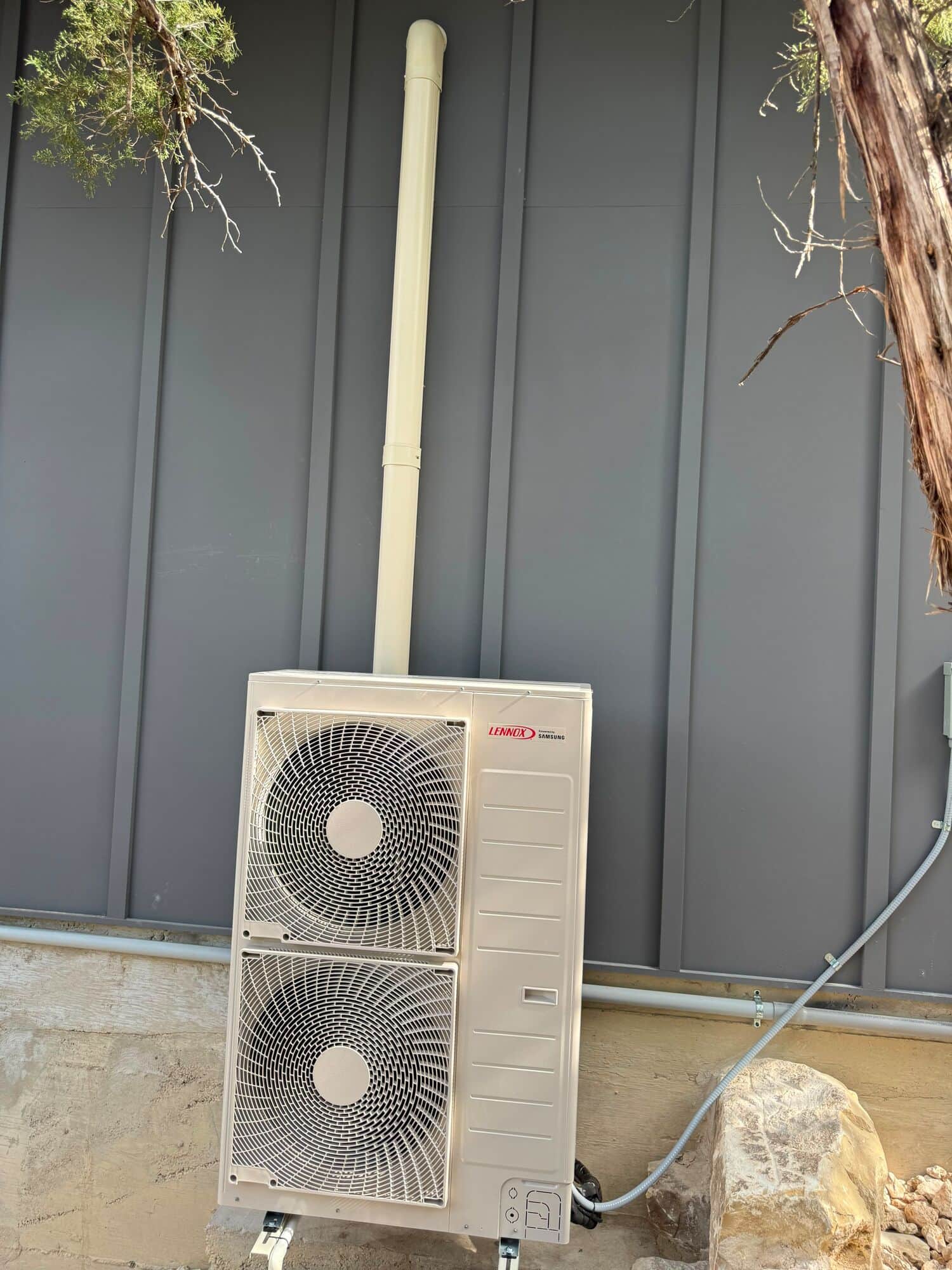
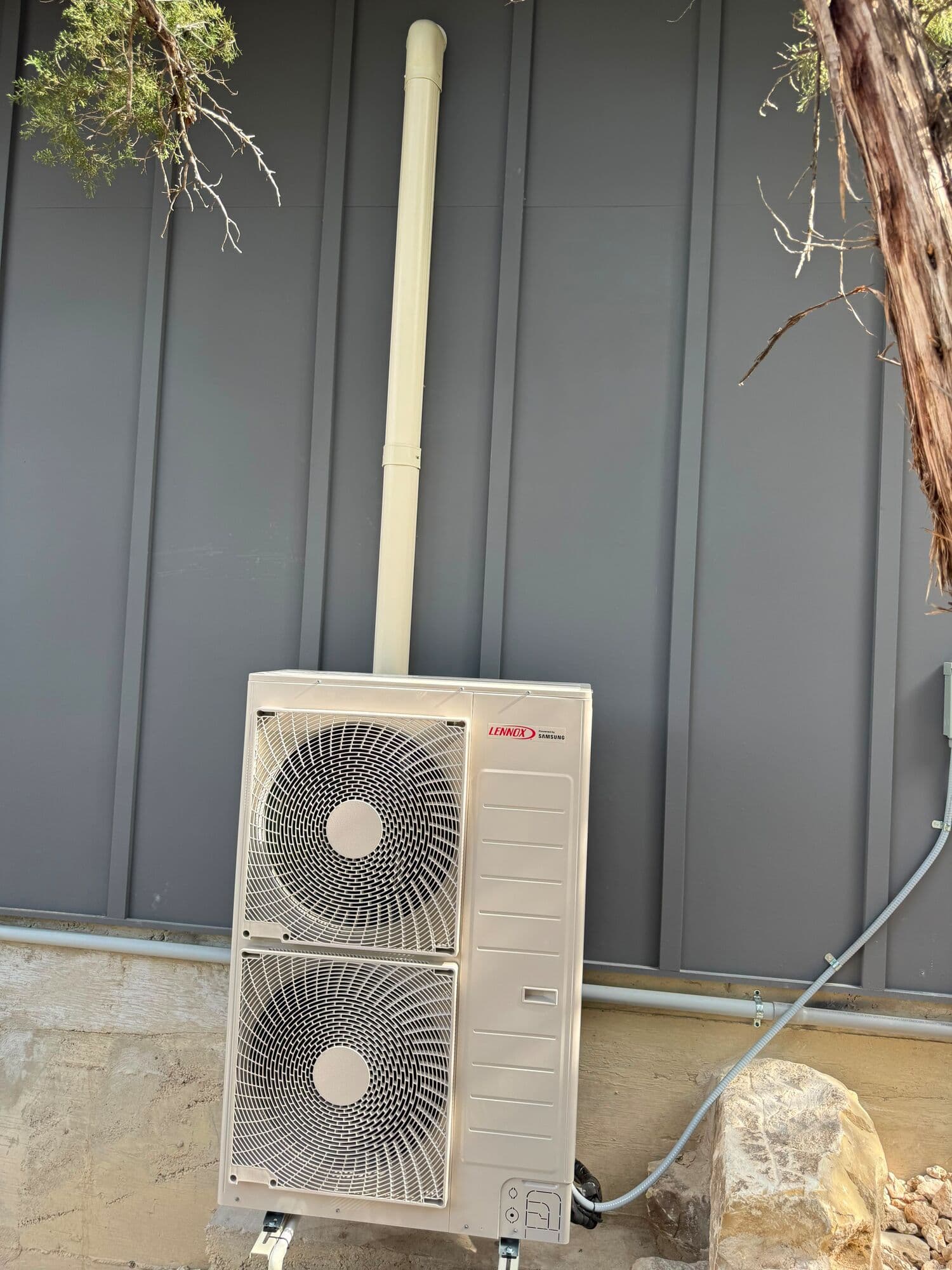
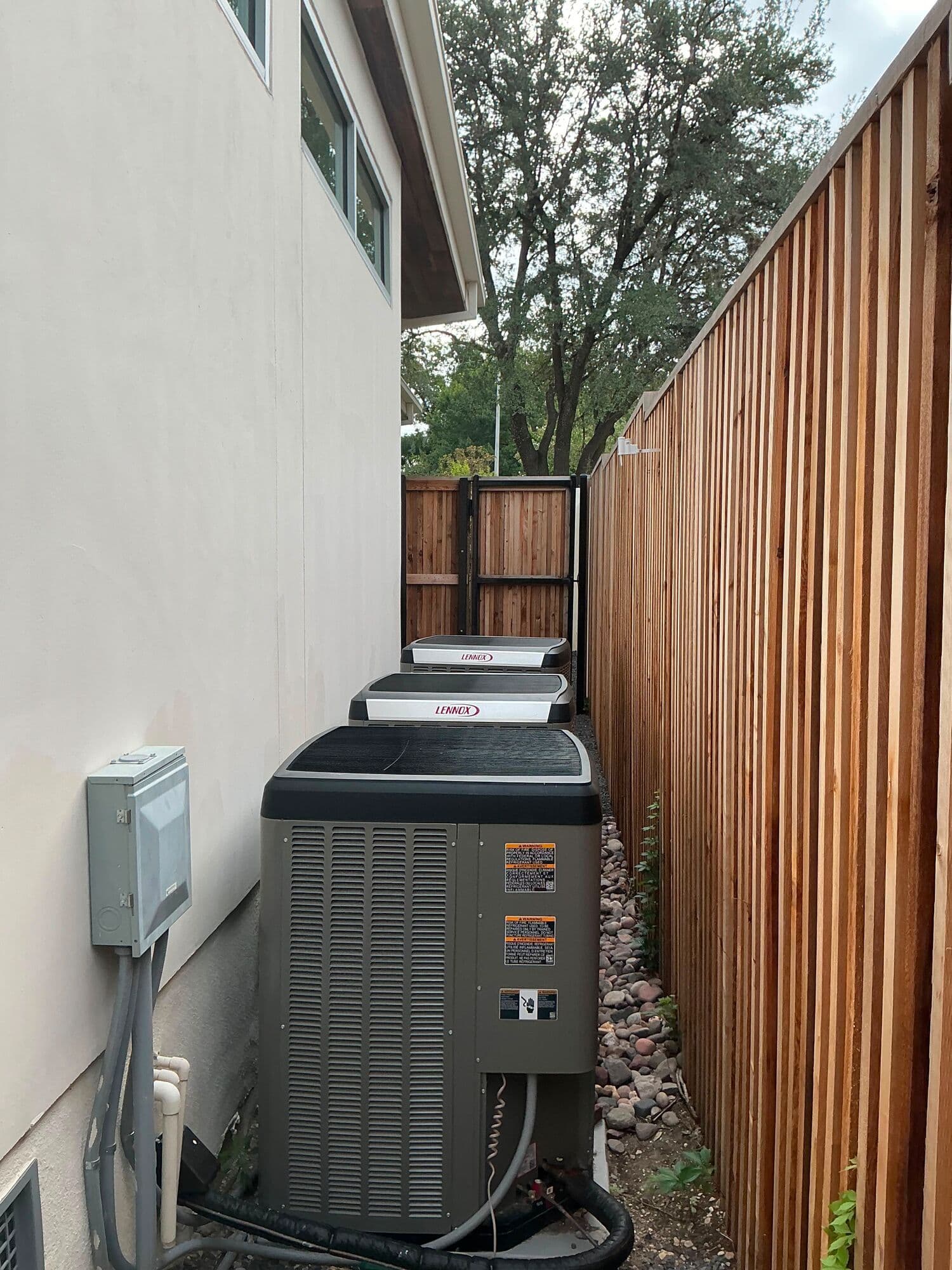
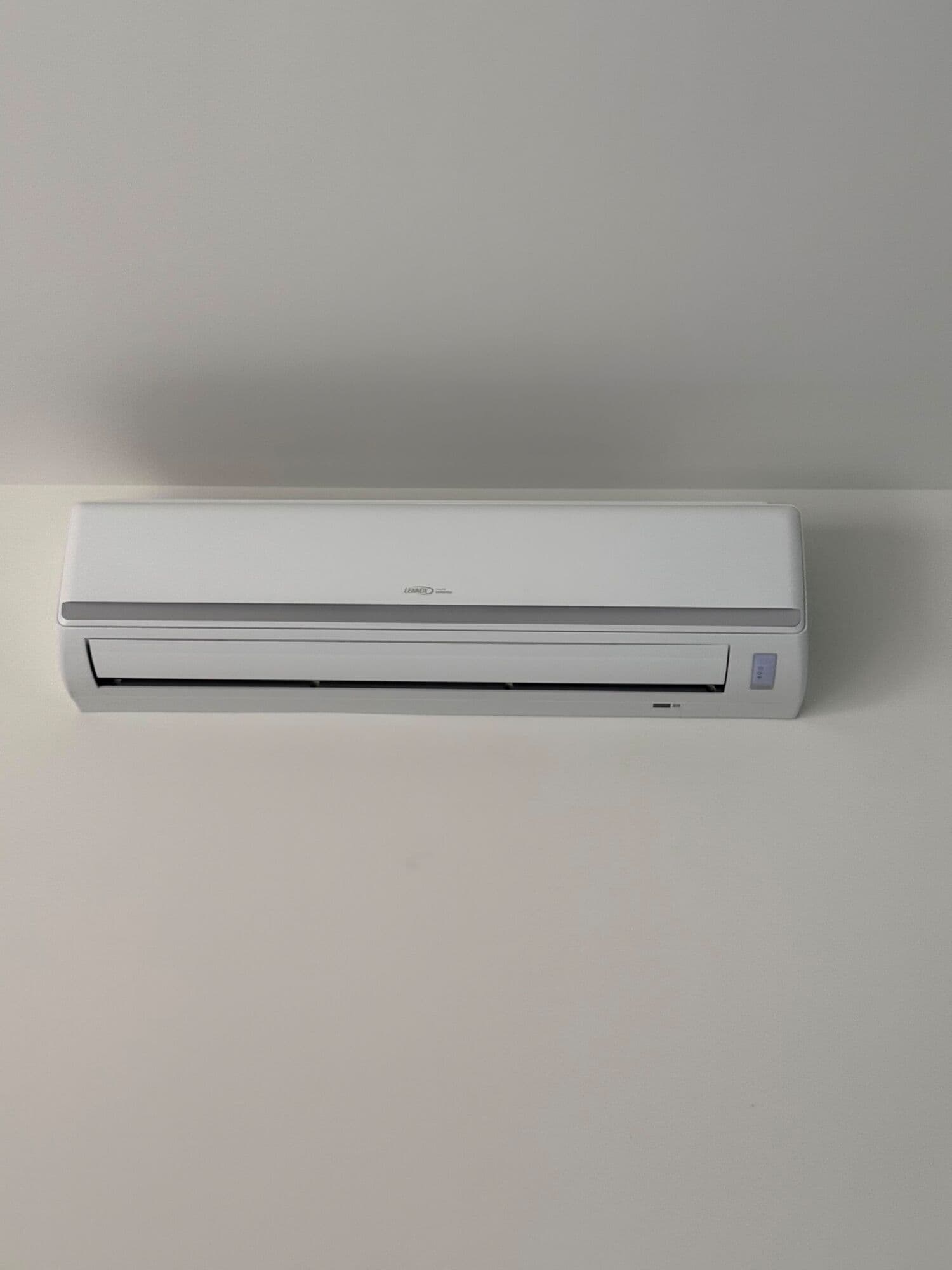
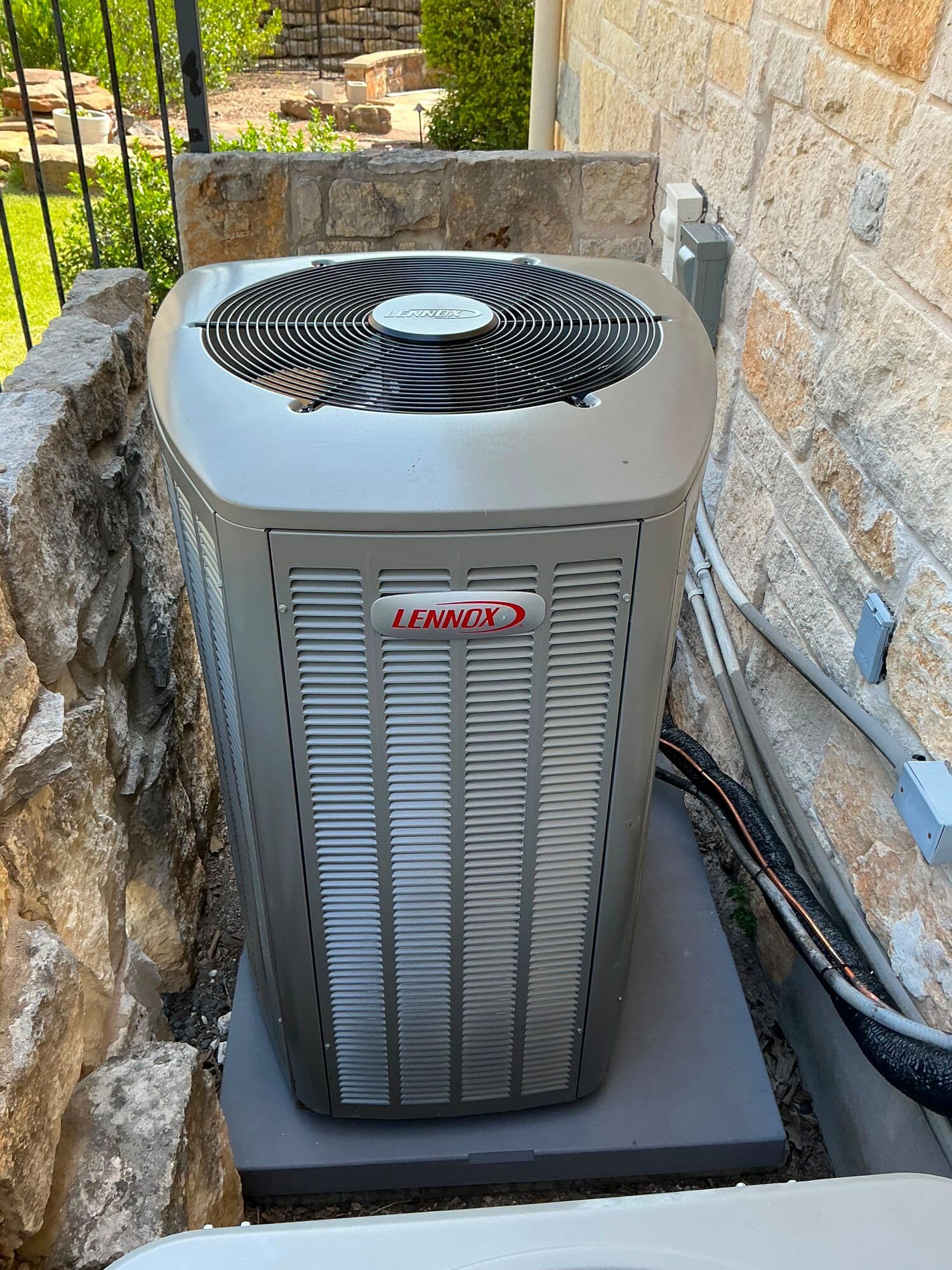
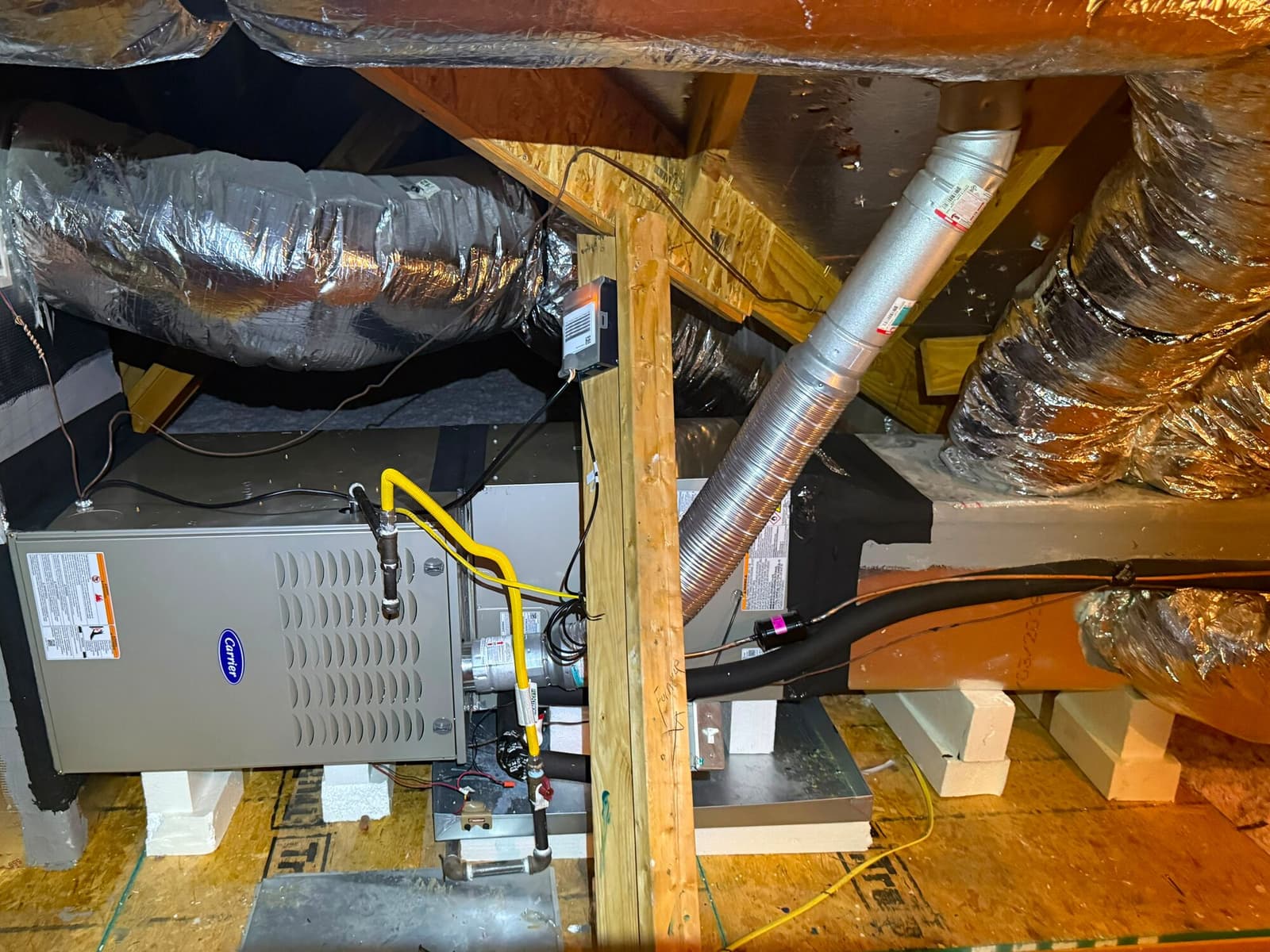
Photographs from our own Central Texas jobs — a closer look at the equipment, the install detail, and the parts that decide whether a system lasts.
Questions about this work
Heat Pumps — straight answers.
Does a heat pump actually work in a Texas cold snap?
For the great majority of Central Texas winter hours, yes, and efficiently. In a genuine hard freeze the auxiliary heat takes over more of the load — that is what it is there for. The system is designed for that handoff; the goal of setting it up correctly is making sure the handoff happens when it should and not on a mild February morning.
Why is my heat pump blowing air that feels cool?
Because heat pump supply air is warm rather than hot — noticeably cooler than a gas furnace, and often cooler than your hand. If the house is holding setpoint, the system is doing its job. If the house is not holding setpoint, that is a different conversation.
My electric bill jumped in January. Is the heat pump the problem?
Frequently the auxiliary strip heat is the problem, not the heat pump. Strips are resistance heat and they consume several times the power for the same output. Aggressive thermostat setbacks, a misconfigured balance point, or a fault that keeps the compressor from running will all put you on strips far more than you should be.
Is a heat pump more expensive to install than an AC and furnace?
It depends entirely on the house — whether there is gas at all, what is already in place, the electrical service, and the ductwork. It is genuinely a per-job number, so it gets quoted after we have looked rather than guessed at over the phone.
Related services
AC Installation & Replacement
New systems and changeouts, sized and installed to actually perform.
Details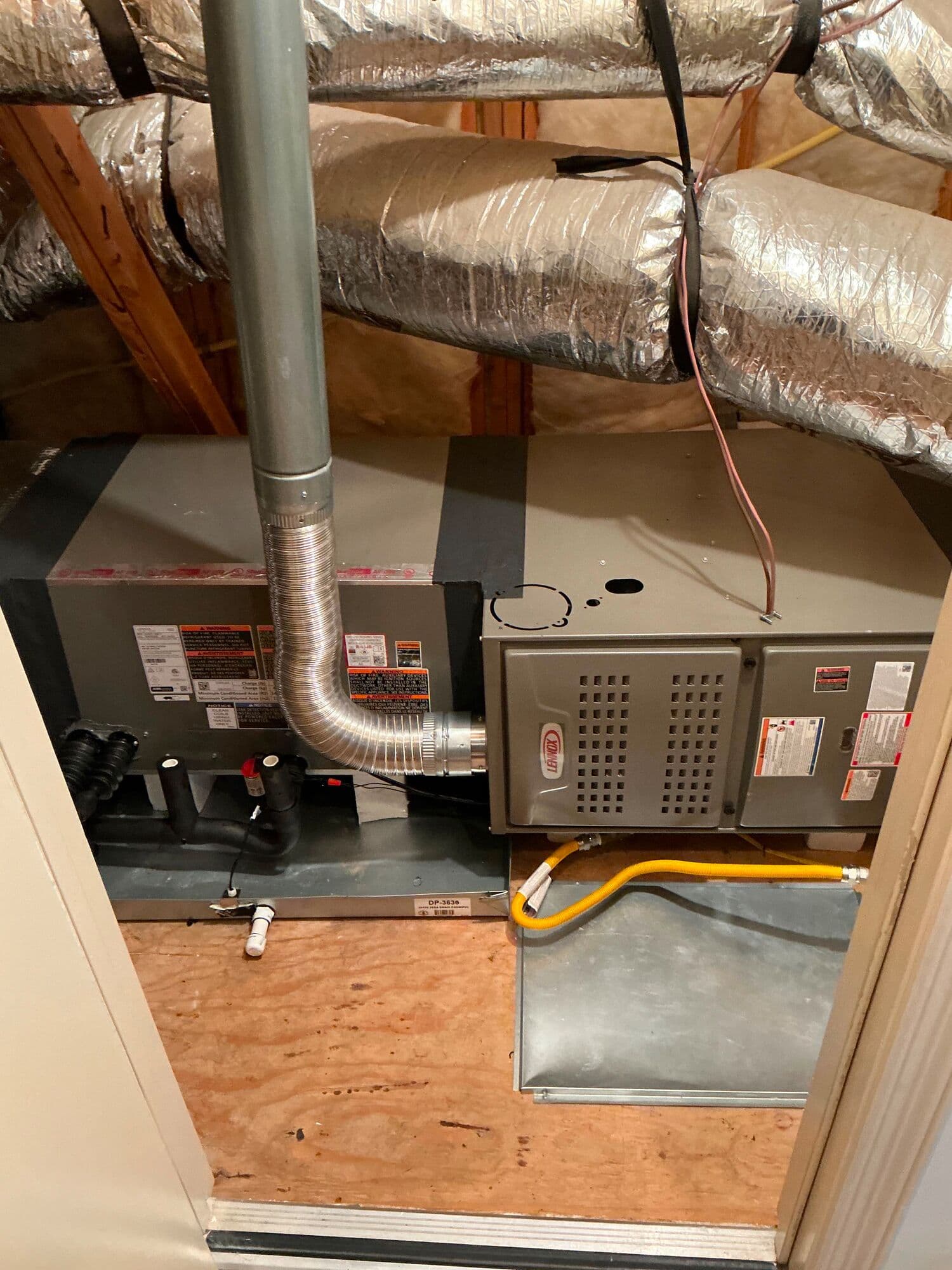
Heating & Furnace Repair
Gas furnaces, electric heat and heat strips — for the six weeks that matter.
DetailsDuctless Mini-Splits
Rooms the ductwork was never sized for: additions, garages, shops, casitas.
Details
Service call · $100
Get a technician out to look at it properly.
Call or text (512) 840-8112. The service call is a flat $100 — a technician comes out, evaluates the system and identifies the issue. If the repair or replacement you approve comes to $500 or more, the $100 is credited toward it. Otherwise — including if you decide against the work — the $100 stands as the fee for the visit. Repairs, replacements and installations are quoted from what we actually find.
ATX Clima LLC · Austin, TX