AC repair · Austin & Central Texas
AC repair and diagnostics in Austin, TX.
Most Central Texas AC failures show up on the hottest week of the year, and most of them are one of five things. We put gauges on the system and find out which, instead of guessing at the thermostat.
Who this is for
Anyone whose system is running and not cooling, cycling on and off constantly, blowing warm air, iced over, tripping a breaker, or dripping water where it should not.
The detail
What this work actually involves.
A system that has stopped cooling in Central Texas is almost never a mystery — it is one of a handful of failures, and they are distinguishable in about twenty minutes with the right instruments. A failed run capacitor. A contactor whose points have welded or burned. A refrigerant leak that has dropped the charge far enough to ice the evaporator. A blower or a duct restriction that has cut airflow below what the coil needs. A compressor that is drawing locked-rotor amps and going nowhere.
What they have in common is that they all look identical from inside the house: the thermostat says 74, the room says 84, and the outdoor unit is either running constantly or not running at all. That is why a diagnosis matters more than a parts list. Adding refrigerant to a system with an airflow problem makes it worse. Replacing a capacitor on a system with a shorted compressor lasts about four minutes. The cheapest repair is the correct one.
In this climate there is also a timing problem. Equipment runs seven months a year here, much of it at full load, so marginal parts survive the mild weeks and fail the first time the load goes vertical. That is why the calls stack up the same week every July, and it is why a system that felt fine in May can be down in June. If your system is running longer than it used to for the same result, it is telling you something before it stops.
What's included
AC Repair, line by line.
- Flat $100 service call — a technician evaluates the system and identifies the issue. Approve $500 or more of work and the $100 is credited toward it; approve less, or decline, and the $100 stands as the visit fee
- Refrigerant pressures and superheat/subcooling read on gauges, not estimated
- Electrical diagnosis: capacitors, contactors, relays, disconnect, breaker and wiring
- Compressor and condenser fan motor testing under actual load
- Evaporator coil checked for icing, restriction and airflow starvation
- Blower motor, wheel and filter checked as an airflow problem, not an afterthought
- Condensate drain, trap and float switch cleared and tested
- Electronic leak detection when the charge is low, so the leak gets found rather than topped off
- A plain-language explanation of what failed and a written price before any repair
The work
AC Repair in detail.
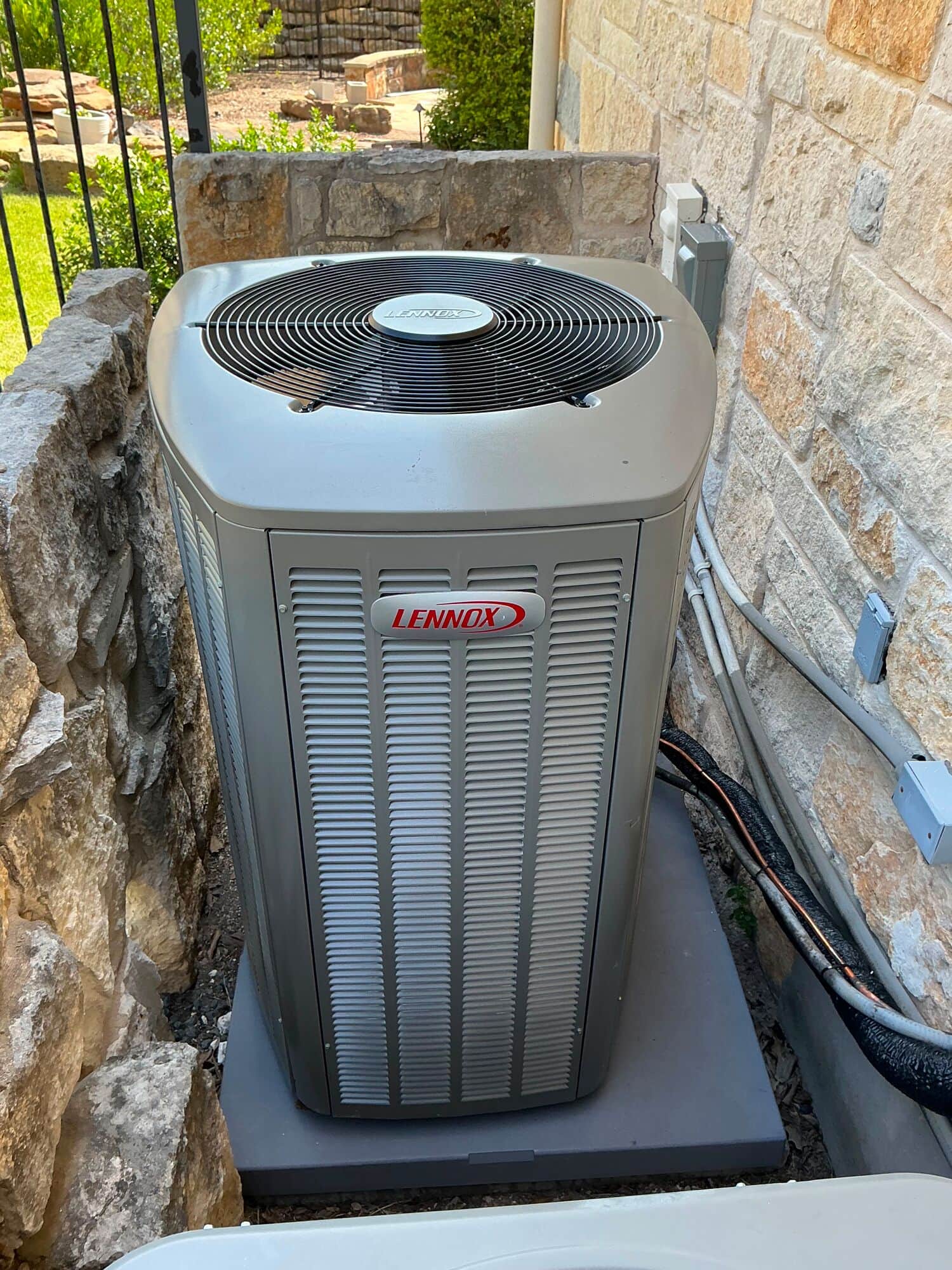
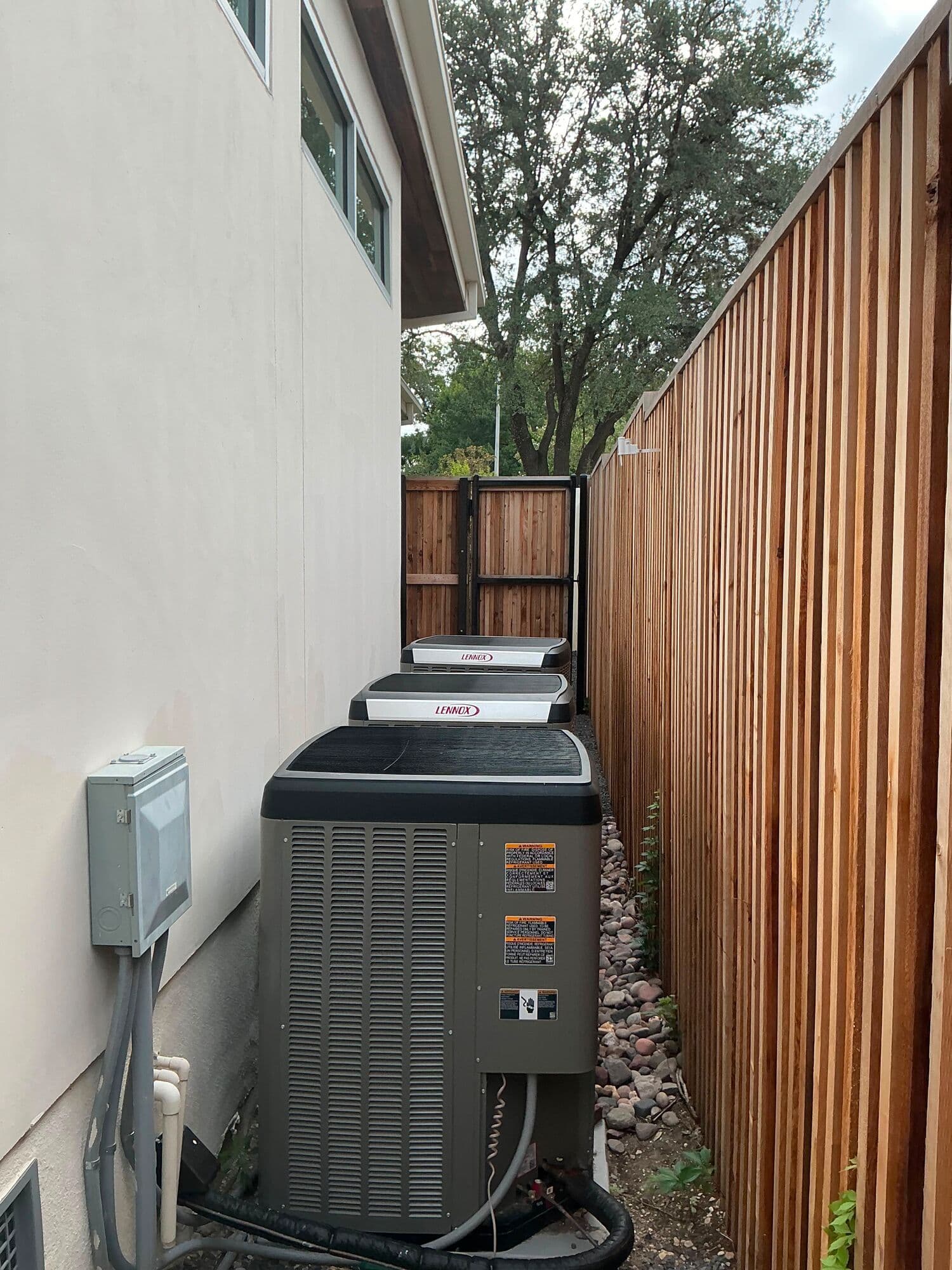
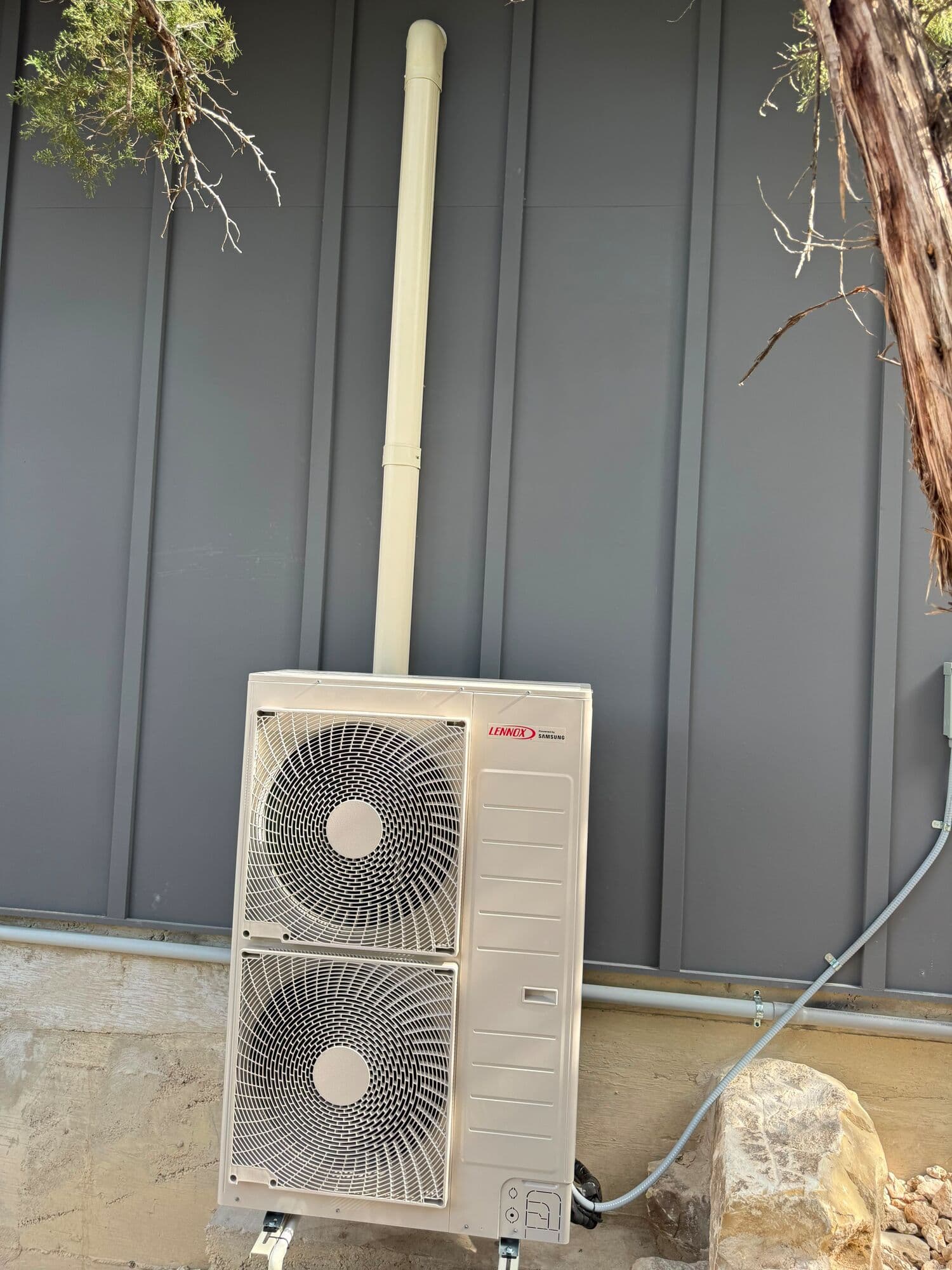
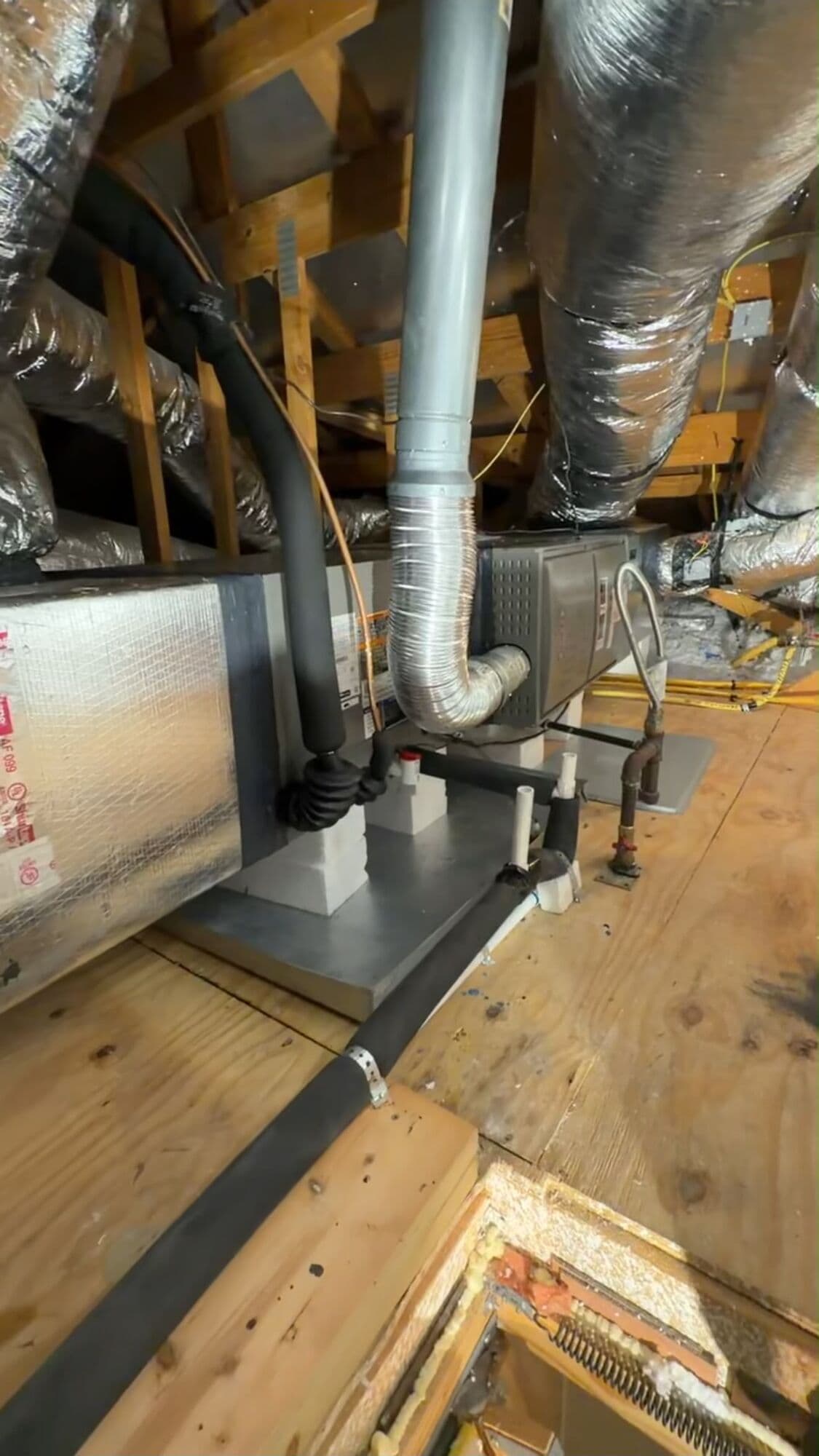
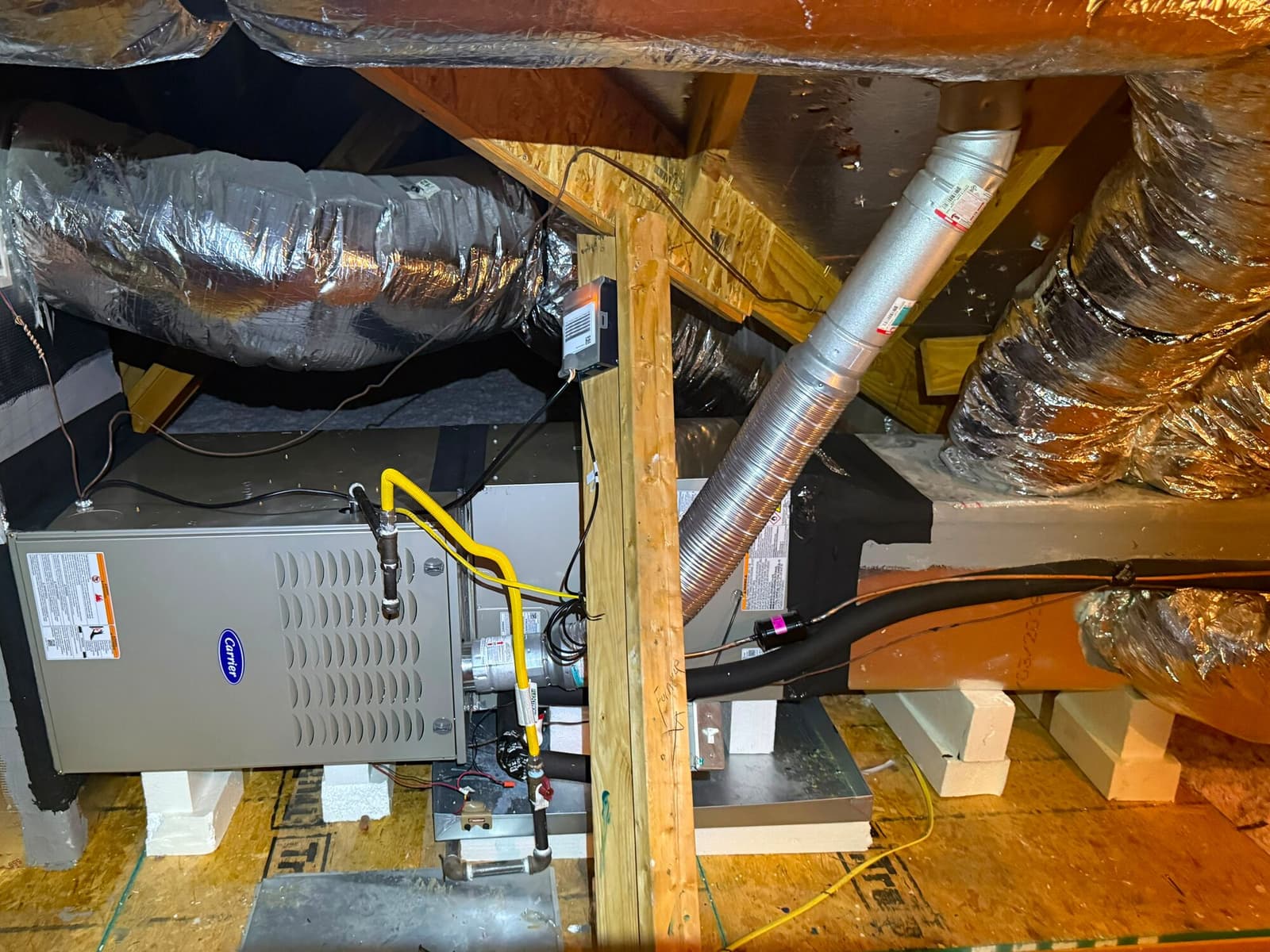
Photographs from our own Central Texas jobs — a closer look at the equipment, the install detail, and the parts that decide whether a system lasts.
Questions about this work
AC Repair — straight answers.
My AC runs constantly. Is that a problem?
On a 100-degree afternoon, near-continuous run time is normal and correct — a properly sized system is meant to run long. The problem is when it runs continuously and the house still gets warmer. That points at low charge, a restricted coil, poor airflow or a compressor that is not doing its job.
The outdoor unit is covered in ice in August. What is that?
Ice means the coil is running colder than it should, which is almost always low refrigerant or not enough air across the indoor coil. Shut the system off at the thermostat and leave the fan on to melt it, then call. Running a frozen system is how compressors get destroyed.
Can you just add refrigerant?
We can, but you should know what you are buying. Refrigerant is not consumed — a sealed system does not use it up, so if it is low there is a leak. Adding more without finding the leak buys weeks, not years. Sometimes that is a reasonable stopgap while you plan a replacement; it should be your decision, not a repair sold to you as a fix.
How much will the repair cost?
The service call is a flat $100 and covers the visit and the diagnosis. If the repair or replacement you approve comes to $500 or more, that $100 is credited toward it. If you approve less than that, or decide against the work, the $100 stands as the fee for the visit. The repair itself is quoted after the diagnosis, from what we actually find, and you approve the number before anything gets replaced. Nights, weekends outside our Saturday hours and holidays are a $150 service call rather than $100.
Related services
AC Installation & Replacement
New systems and changeouts, sized and installed to actually perform.
DetailsPreventive Maintenance
$300 per system, per visit. A comprehensive service to keep it efficient and reliable.
DetailsDuctwork & Airflow
The room that never cools is almost never an equipment problem.
Details
Service call · $100
Get a technician out to look at it properly.
Call or text (512) 840-8112. The service call is a flat $100 — a technician comes out, evaluates the system and identifies the issue. If the repair or replacement you approve comes to $500 or more, the $100 is credited toward it. Otherwise — including if you decide against the work — the $100 stands as the fee for the visit. Repairs, replacements and installations are quoted from what we actually find.
ATX Clima LLC · Austin, TX